
User guide






140 Chapter 10: Device Detection
AirMagnet Spectrum XT User Guide
Impact on 802.11b/g WLAN
Because wireless game controllers operate in the same radio frequency as the 802.11b/g
WLAN, radio signals from these devices have long been identified as a source of RF
interference to 802.11b/g WLANs in homes and businesses where they are used. They can
significantly slow down Internet applications such as Web file download and surfing.
Recommended Courses of Action
Once the interfering wireless game controllers are successfully identified, the following
actions are recommended to minimize or eliminate the RF interference they cause to the
802.11 WLAN.
• Try to keep a “safe distance” between your 802.11b/g AP and wireless game
controller so as to keep interference to the minimum.
• Check the operating channels on the wireless game controller to make sure that they
do not overlap with the operating channels of your 802.11b/g network.
• If possible, consider using an 802.11a AP or even upgrading your WLAN to the
802.11n standard.
Frequency-hopping Spread Spectrum devices
Introduction
When the IEEE 802.11 Spec was first ratified, there were two data transmission strategies
included: direct-sequence spread spectrum (DSSS) and frequency-hopping spread spectrum
(FHSS). It was found that, in order to support both strategies, two separate, incompatible sets
of transmission technology would have to be developed and maintained. In lieu of this fact,
and that 802.11b (which supported DSSS) was more reliable than FHSS, the FHSS strategy was
discarded.
When using FHSS, the transmitter shifts the central frequency of a signal several times a
second, with each hop taking place in a pseudo-random pattern that both the transmitter and
receiver know. In the United States, the FCC mandated at least 75 unique frequencies needed
to be used, with a maximum dwell time on each frequency of no more than 400 milliseconds.
Limited to speeds of only 1 and 2 Mbps, it was found that not only were FHSS and DSSS
incompatible from a communication standpoint, but the FHSS transmissions also interfere
with the DSSS communication stream.
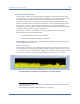
RF Spectrum Pattern
While never officially recognized as a ratified 802.11 transmission strategy, there were
manufacturers that produced devices with limited interoperability for commercial
applications, like Point-of-Sale solutions.
Below is a short list of manufacturers of 802.11 FHSS devices:
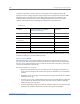
• Alvarion
• BreezeCom
• Digital/Cabletron