
User guide




124 Chapter 10: Device Detection
AirMagnet Spectrum XT User Guide
Analog Cordless Phones
Analog cordless phones are another source of interference to 802.11b/g or 802.11a wireless
LANs (WLANs). Unlike digital cordless phones, analog cordless phones use narrowband
transmission which occupies only a narrow bandwidth of the RF spectrum. Because of this,
they can cause severe interference to an 802.11a/b/g AP operating in the same channel or
frequency even though no significant interference to APs on other non-overlapping channels
has been noticed.
One lab study found that an analog cordless phone transmitting on 2.412-GHz frequency
which happens to be the center frequency of Channel 1 of the 802.11b/g WLAN can
effectively take out the wireless connection on that channel the moment the phone which is
placed next to an AP is turned on, whereas connections on the other two non-overlapping
channels (6 and 11) were barely affected. The study also found that network throughput could
drop by 99% with the analog cordless phone placed at 50 feet away from the AP, 20% at 100
feet away, and 5% at 150 feet away. The study concluded that analog cordless phones, if
placed close to APs, can virtually disrupt wireless connection on the channel they operate.
RF Spectrum Pattern
There are numerous analog cordless phones available on the market today. They are widely
used in homes and businesses and are also a source of RF interference to the 802.11 WLAN.
Below is a short list of analog cordless phones:
• GE 27923GE (2.4-GHz)
• Uniden EXP4540 (2.4-GHz)
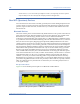
Figure 10-5 shows the RF spectrum pattern of a 2.4-GHz analog cordless phone.
Figure 10-5: RF spectrum pattern of a 2.4-GHz analog cordless phone
Impact on 802.11 WLAN
Because the 2.4-GHz and 5-GHz radio bands are unlicensed (free to all), there are numerous
2.4-/5-GHz analog cordless phones by different manufacturers available on the market. They
are widely used in homes and businesses where 802.11b/g or 802.11a WLANs are deployed.
They have been recognized as a major source of RF interference for 802.11b/g or 802.11a
WLANs. You may tackle these interfering 2.4-/5-GHz analog cordless phones by first
identifying and locating them in your WLAN.