
User guide




122 Chapter 10: Device Detection
AirMagnet Spectrum XT User Guide
802.11b/g WLAN in close proximity. As a result, no matter which channel your WLAN use or
switch to (Remember that there are only 3 non-overlapping channels in the 2.4-GHz radio
band, i.e., channels 1, 6, and 11), it is hard for 802.11b/g APs to escape the RF interference
caused by 2.4-GHz FHSS digital cordless phones. Such sources of interference can cause
significant disruption in WLAN service and performance degradation.
RF Spectrum Pattern
There are numerous digital cordless phones available on the market today. They are widely
used in homes and businesses and are also a source of RF interference to the 802.11 WLAN.
Below is a short list of digital cordless phones:
• Panasonic KX-TGA271 (2.4-GHz, FHSS)
• Panasonic KX-TG2700S (2.4-GHz, FHSS/DSS)
• Panasonic KX-TG5050 (5.8-GHz, DSS)
• AT&T 2355 (2.4-GHz)
• AT&T E5965C (5.8-GHz, FHSS/DSS. The base transmits in 5.8 GHz whereas the phone
transmits in 2.4 GHz.)
• Uniden EX15660 (5.8-GHz)
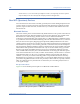
Figure 10-2 and Figure 10-3 show the RF spectrum patterns of a 2.4-GHz and a 5-GHz digital
cordless phone, respectively.
Figure 10-2: RF spectrum pattern of a 2.4-GHz DSSS digital cordless phone
Figure 10-3: RF spectrum pattern of a 2.4-GHz FHSS digital cordless phone