
Instructions / Assembly


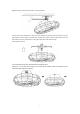


Table Of Contents
- USE AND CARE GUIDE
- Important Safety Instructions
- Additional Safety Instructions
- Unpacking Instructions
- Energy Efficient Use of Ceiling Fans
- Turn Off When Not in the Room
- Using the Ceiling Fan Year Round
- Electrical and Structural Requirements
- Low-profile use (Figure 1)
- Brace use (Figure 3)
- How to Hang Your Ceiling Fan
- How to Install Your Light Bulbs
- How to Install Your Remote Control
- Replacement and Disassembly of Fan Blades
- How to Operate Your Ceiling Fan
- Maintenance

9
How to Operate Your Ceiling Fan
1. IMPORTANT: Using a full range dimmer switch (not included) to control fan speed will
damage the fan. To reduce the risk of fire or electrical shock, do not use a full range dimmer
switch to control the fan speed.
2. Restore electrical power to the outlet box by turning the electricity on at the main fuse box.
3. To make fan operational, install two 1.5V AAA battery (not included) in hand-held remote
transmitter, with fan power off. (If not used for long periods of time, remove battery to prevent
damage to transmitter). Store the remote away from excessive heat or humidly.
Maintenance
1. Periodic cleaning of your new ceiling fan is the only maintenance that is needed. When
cleaning, use only a soft brush or lint free cloth to avoid scratching the finish. Abrasive cleaning
agents are not required and should be avoided to prevent damage to finish.
WARNING: Check to see that all connections are tight, including ground, and that no bare
wire is visible at the wire connectors, except for the ground wire. Do not operate fan until the
blades are in place. Noise and fan damage could result.
WARNING: Do not operate this fan with a variable (Rheostat) wall controller or dimmer
switch. Doing so could result in damage to the ceiling fan's remote control unit.
CAUTION: Do not use water when cleaning your ceiling fan. It could damage the motor or
the finish and create the possibility of electrical shock.