
Manual

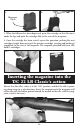




The bolt of your 22 LR Classic can be in 2 positions. It can be locked in the rear-
ward position, held by the bolt stop, or it can be fully forward against the cham-
ber of the barrel.
1. If the bolt is locked in the rearward position by the bolt stop, once the mag-
azine is inserted into the action, release the bolt from its locked position by
pulling slightly rearward on the operating handle and then letting go. The bolt
will travel forward, strip a cartridge from the magazine and push it into the
chamber. The rifle is now loaded. The safety should be in the “ON” position.
2. If the bolt is in the closed position, once the magazine has been seated, pull
the bolt fully rearward by grasping the operating handle. When the bolt is fully
rearward, release the operating handle. The bolt will move forward, strip a car-
tridge from the magazine and push the cartridge into the chamber. The rifle is
now loaded and the safety should be in the “ON” position.
If the cartridge fails to fully enter the chamber, do not apply force to the
bolt handle to aid in the chambering of the cartridge. If the cartridge does
not fully chamber - eject it from the rifle. FAILURE TO HEED THIS
WARNING MAY RESULT IN A N ACCIDENTAL DISCHARGE AND
CAN BE HAZARDOUS TO THE SHOOTER OR BYSTANDERS AND
CAN CAUSE DAMAGE TO PROPERTY.
Firing the T/C 22 LR Classic Rifle
Once loaded, the TC 22 LR Classic rifle is ready to fire. Bring the butt of the
rifle to your shoulder, aim the muzzle at the intended target, slide the safety for-
ward to the “OFF” position and pull the trigger. The rifle will now fire each time
the trigger is pulled until all the cartridges in the magazine and the one in the
chamber have been fired. Firing will automatically rechamber a cartridge and
recock the (internal) hammer.
The safety of your T/C 22LR Classic should be in the rearward “ON” posi-
tion at all times unless you are actually engaged in the act of shooting.
FAILURE TO HEED THIS WARNING CAN CAUSE INJURY AND/OR
DEATH TO THE SHOOTER OR BYSTANDERS AND DAMAGE TO
PROPERTY.
Inspect the fired cartridge cases:
After firing a few r
ounds and befor
e loading the magazine again, pick up and
inspect some of the fir
ed car
tridge cases. Check the car
tridge case head for
cracks or splits. Any abnormalities of the empty cartridge cases could indicate a
pr
oblem with your rifle. Do not attempt to fir
e the rifle if you obser
ve any abnor
-
14