
User Manual



EN
17
Range Testing
Before each ying session, and especially with a new model, it’s important to
perform a range check. All Spektrum aircraft transmitters incorporate a range
testing system, which reduces the output power to allow a range check.
1. With the model resting on the ground, stand approximately 100 feet (30
meters) away from the model.
2. Face the model with the transmitter in your normal ying position and put
your transmitter into range test mode.
3. You should have total control of the model in range test mode at 100 feet.
4. If you have control issues, review the ight log data to help reposition your
receiver, and repeat the range test.
5. If control issues persist, call Horizon Product Support for further assistance.
Advanced Range Testing
A telemetry-equipped Spektrum Transmitter is required for the advanced
range test. This test will conrm if the AR630 is sufcent for your application.
This advanced range check allows the RF performance of the receiver to be
evaluated in different orientations to search for reections or shadows affecting
the control signal.
1. Stand approximately 100 feet away from the model.
2. Face the model with the transmitter in your normal ying position and put
your transmitter into range test mode.
3. Have a helper position the model in various orientations (nose up, nose
down, nose toward the transmitter, nose away from the transmitter, etc.).
4. Test every possible orientation the aircraft could encounter during ight for
approximately one minute.
5. Observe the telemetry on your transmitter. Note any orientations that cause
higher fades or frame loss values.
6. Reposition the receiver further away from conductive materials as necessary.
7. Retest to verify satisfactory results.
8. Repeat as neccesary.
After one minute, advanced testing should yield:
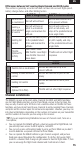
H - 0 holds
F - Fewer than 10 frame losses
A - Fades will typically be fewer than 100.
For sophisticated aircraft that contain signicant amounts of conductive
materials (e.g. turbine powered jets, scale aircraft with metalized nishes,
aircraft with Large Li-Po batteries, aircraft with carbon ber fuselages, etc.),
we recommend a different Spektrum receiver with longer antennas and/or a
receiver that supports remote receivers (MultiLink technology).