
Quick Start Guide




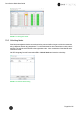
Table Of Contents
- 1 Electronic Shelf Labeling – A brief introduction
- 2 Label Family Introduction
- 3 Get the latest software and documentation
- 4 Core Appliance
- 5 Core Appliance initial setup
- 6 Start SES-imagotag Core Service and SES-imagotag Control Center
- 7 ESL Access Point Configuration
- 8 Selecting channels
- 9 Setup Security
- 10 Register labels
- 11 Start tagging
- 12 Templates
- 13 Integration
- 14 Troubleshooting
- 14.1 SES-imagotag Core Service Dashboard
- 14.2 Running the SES-imagotag Core Service as a background service
- 14.3 Where can get a demo/development license key?
- 14.4 Deleting the demo articles
- 14.5 Establish a network configuration when no DHCP is available – Step by step
- 14.6 Access point discovering with Bonjour Services
- 14.7 What can I do if the Status LED of the AP-2010 access point doesn’t turn blue?
- 14.8 Labels don’t come online
- 14.9 The encryption does not work
- 14.10 Unlocking labels
- 14.11 Starting Java applications
- 14.12 Encoding problems
- 14.13 Reserve RAM for Java heap space
- 14.14 Further documentation

Core Service Quick Start Guide
Page 24 of 45
ESL channels reserved for the communication with the labels. Five of these ESL channels do not
interfere with typical Wi-Fi installations and should therefore be favored. These are the ESL channels
3, 5, 8, 9 and 10 and they should be selected if there is a Wi-Fi installation on the Wi-Fi channels 1, 6
and 11.
FIGURE 1-23: Visualization of ESL channels vs. Wi-Fi channels
Warning: Do not select the same ESL channel on two access points within one area. This will cause
interferences and avoids labels from joining the network. The same ESL channel may only be
selected on two access points if it can be guaranteed that every label is within the range of only one of
these access points.