914 Bedienungsanleitung Instructions for use Notice d‘emploi Istruzioni per l‘uso Instrucciones para el uso Gebruiksaanwijzing
914 The cardioid 914 is a pre-polarised condenser microphone designed for demanding applications which require a wide frequency response, high sound pressure level, fast transient response and a compact design. With its frequency response of 20 Hz to 20 kHz, the 914 is able to capture the full sound of the instrument, while its cardioid pick-up pattern isolates the microphone from other on-stage signals.
Delivery includes y 914 microphone y Pouch y MZQ 800 microphone clamp y MZW 64 windshield y Instructions for use y Warranty Certificate Note: The microphone head is not compatible with the K6 powering module.
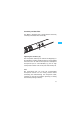
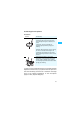
Sensitivity and bass filter The 914 is equipped with a three-position sensitivity switch (A) and a bass filter switch (B). B A Adjusting the sensitivity (A) The microphone sensitvity can remain unchanged (0) or be reduced by 10 dB or 20 dB. The latter is recommended when there is a risk that the microphone or subsequent microphone input is overmodulated, e.g. due to high sound pressure levels from drums, brass instruments, etc.
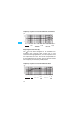
Frequency response curves with different sensitivities dBv - 35 - 40 - 45 - 50 - 55 - 60 - 65 - 70 20 50 100 200 500 1000 2000 0 dB -10 db 5000 10000 20000 Hz -20 db Adjusting the bass filter (B) The 914 has been designed for an extended lowfrequency bass response. With certain live or close instrument miking applications, an over-emphasis of the low frequencies can occur. This can be compensated for by the 6 dB/octave roll-off filter.
Positioning the microphone Percussion Position Commentary Positioning the microphone a few centimetres above the outer edge of the hi-hat aiming down gives a natural, clear sound. If necessary, remove unwanted lowfrequency signal portions by high pass filtering. Attention: When closing the hi-hat, a strong air current is created on the edge. If the microphone is positioned too close to the edge, interfering noise due to the air current can occur. Good starting position for live miking applications.
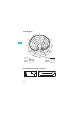
Polar diagram 0° 0 30° 30° 5 10 60° 60° 15 20 25 90° dB 90° 120° 120° 150° 150° 125 250 500 1000 180° Hz Hz Hz Hz 2000 4000 8000 16000 Hz Hz Hz Hz Pin assignment of XLR-3 connector + + 2 1 3 XLR 16 1 2 + + 2 1 3 3 XLR XLR
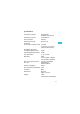
Specifications Transducer principle pre-polarised condenser microphone 20–20,000 Hz cardioid 48 V/2.2 mA Frequency response Pick-up pattern Phantom powering Sensitivity (free field, no load at 1 kHz) 7 mV/Pa; 2.3 mV/Pa / 0.7 mV/Pa (with pre-attenuation) Equivalent noise level A-weighted (DIN IEC 651) 19 dB CCIR-weighted (CCIR 468-3) 30 dB Pre-attenuation 0, -10, -20 dB Bass filter linear roll-off 130 Hz, 6 dB/oct. cut-off 85 Hz, 18 dB/oct. Max.
Vocals x Choir Studio, acoustic instruments x x x x x Orchestra x Trumpets,Trombones x x Saxophone x x x x Acoustic guitar x Acoustic bass x Guitar amplifiers x Bass amplifiers Leslie x x x x x Piano, grand piano Kick Drum x x x x x Rack toms x x x x x x Congas x x Snare Drum Floor toms x x x x x x x x x x x x Cymbals Percussion x x x x Overhead x Conference table, altar x x Lectern x x Theater stage x x 18 e935/e945 e914 e912 S e912
Manufacturer declarations Warranty 2 years Approval Sennheiser electronic GmbH & Co. KG declare that this device is in compliance with the applicable CE standards and regulations. WEEE Declaration Please dispose of this product at the end of its operational lifetime by bringing it to your local collection point or recycling centre for such equipment.
20
Sennheiser electronic GmbH & Co. KG 30900 Wedemark, Germany Phone +49 (5130) 600 0 Fax +49 (5130) 600 300 www.sennheiser.com Printed in Germany Publ.