
Manual




102 Rockwell Automation Publication 1732E-UM003B-EN-E - March 2014
Appendix B Module Tags
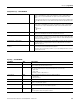
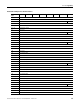
I.OffsetTimeStamp DINT[2] The time when the PTP message was received to cause the Local Clock Offset to update.
This value is initially zero. The first timestamp occurs when the module synchronizes with the
Grandmaster clock.
I.GrandmasterClockID DINT[2] The ID number of the Grandmaster clock that the module is synchronized to.
I.TimeStamp DINT[2] Timestamp to be used with scheduled outputs and CIPSync/PTP. Used to synchronize outputs
across the system by indicating the time which the output module is to apply its outputs.
I.Schedule.State SINT Current state of the schedule at index xx:
0 = Inactive
1 = Active, (that is, schedule is next to be applied but not within next scheduling)
2 = Current, (that is, schedule is next to be applied and within next scheduling period
3 = expired, (that is, schedule has been applied)
4 = Schedule discarded – request in error
5 = Late, but applied – schedule arrived after scheduled time but was applied since no more
current schedule received
I.Schedule.SequenceNumber SINT Echo of SequenceNumber from the output image. Valid values 0…3.
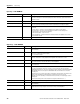
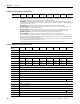
Input Tags – 1732E-OB8M8SR
Tag Name Type Description
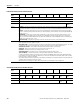
Output Tags – 1732E-OB8M8SR
Tag Name Type Description
O.Data SINT Output Data to apply to unscheduled channels (those with a value of zero configured in
ScheduleMask).
O.ScheduleMask SINT Mask indicating which channels are scheduled.
Per bit 0 = use Data value (normal output)
1 = use scheduled output.
O.TimeStampOffset DINT System Time to Local Time Offset. Output should monitor for a delta between send value and
module's value and run a Step Compensation Algorithm if the difference is >10 ms.
O.ScheduleTimeStamp This is the 64-bit system time the schedule TimeStampOffset will use to apply the output. The
ouput will transition at ScheduleTimeStamp + TimeStampOffset.
O.Schedule.ID DINT Indicates which schedule is to be loaded with attached data. Valid schedules are 1…16.
0 = No schedule.
O.Schedule.SequenceNumber SINT Echo of sequence number in output data.
In order to acknowledge receipt of an event the user must transition the corresponding
NewDataAck bit from 0 to 1 and set the EventAck to indicate whether to acknowledge the Off-
On or On-Off transition for the input. the NewDataAck bits and EventAck are in consumed
assembly 139.
Timestamps are zero at power-up and after a timestamp is acknowledged. The time base and
epoch of the timestamps are determined by the grandmaster clock of the system.
All data listed in this assembly is in Little Endian format, LSB first, in increasing byte order to
MSByte last.
Value must be changed for a new schedule to be recognized. Valid values 0…3.
O.Schedule.OutputPtSelect SINT The output point the schedule is applied to. Valid values 0…7.
O.Schedule.Data SINT Output Data to apply to unscheduled channels (those with a value of zero configured in
ScheduleMask).
O.Schedule.TimeStampOffset DINT Offset to add with TimestampOffset to determine absolute Time to apply Data to physical
Output. Allows for range of approx. ±35 minutes from base TimestampOffset.