
User`s manual

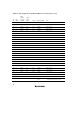

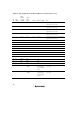


Table Of Contents
- Cover
- Notes regarding these materials
- Contents
- Section 1 System Configuration
- Section 2 Connecting the Emulator to the User System
- 2.1 Connecting the Emulator to the User System
- 2.2 Connecting the Emulator to the User System by Using the EV-chip Unit
- 2.2.1 Connecting the EV-chip Unit to the Emulator
- 2.2.2 Connecting the E200F External Bus Trace Unit to the EV-chip Unit
- 2.2.3 Connecting the Probe Head to the EV-chip Unit
- 2.2.4 Connecting the E200F Emulation Memory Unit to the EV-chip Unit
- 2.2.5 Connecting the E200F External Bus Trace Unit, Emulation Memory Unit, and EV-chip Unit
- 2.2.6 Connecting the EV-chip Unit to the User System Interface Board
- 2.3 Connecting the Emulator to the User System by Using the H-UDI Port Connector
- 2.4 Installing the H-UDI Port Connector on the User System
- 2.5 Pin Assignments of the H-UDI Port Connector
- 2.6 Recommended Circuit between the H-UDI Port Connector and the MCU
- 2.7 Connecting the E200F External Bus Trace Unit with the User System
- 2.8 Installing the External Bus Trace Unit Connector
- 2.8.1 External Bus Trace Unit Connector Installed on the User System
- 2.8.2 Pin Assignments of the User System Connector
- 2.8.3 Recommended Foot Pattern
- 2.8.4 Restrictions on Component Installation
- 2.8.5 Pin Assignments of the External Bus Trace Unit Connector
- 2.8.6 Layout of the External Bus Trace Unit Connector
- 2.9 Connecting the External Bus Trace Unit to the User System
- 2.9.1 Connecting the E200F External Bus Trace Unit to the Emulator Main Unit
- 2.9.2 Connecting the E200F External Bus Trace Unit to the User System
- 2.9.3 Connecting the E200F Emulation Memory Unit to the Emulator Main Unit
- 2.9.4 Connecting the Emulation Memory Unit to the User System
- 2.9.5 Connecting the E200F External Bus Trace Unit, Emulation Memory Unit, and User System
- Section 3 Software Specifications when Using the SH7211
- 3.1 Differences between the SH7211 and the Emulator
- 3.2 Specific Functions for the Emulator when Using the SH7211
- 3.2.1 Event Condition Functions
- 3.2.2 Trace Functions
- 3.2.3 Notes on Using the JTAG (H-UDI) Clock (TCK) and AUD Clock (AUDCK)
- 3.2.4 Notes on Setting the [Breakpoint] Dialog Box
- 3.2.5 Notes on Setting the [Event Condition] Dialog Box and the BREAKCONDITION_ SET Command
- 3.2.6 Performance Measurement Function
- Section 4 User System Interface Circuits
- Colophon

26
Table 2.4 Pin Assignments of the External Bus Trace Unit Connector (cont)
Pin
No.
I/O
(CONT)
E200F
Trace I/F
Connector
Pin Name
SH7211
Signal
Name
Voltage
Meaning of Signal
Note
54 IO UD-P11 D11 3.3 V Data bus Same as above.
55 IO UD-P12 D12 3.3 V Data bus Same as above.
56 IO UD-P13 D13 3.3 V Data bus Same as above.
57 IO UD-P14 D14 3.3 V Data bus Same as above.
58 IO UD-P15 D15 3.3 V Data bus Same as above.
59 - GND GND GND
60 - GND GND GND
61 IO UD-P16 D16 3.3 V Data bus Connect the data signal of the MPU.
62 IO UD-P17 D17 3.3 V Data bus Same as above.
63 IO UD-P18 D18 3.3 V Data bus Same as above.
64 IO UD-P19 D19 3.3 V Data bus Same as above.
65 IO UD-P20 D20 3.3 V Data bus Same as above.
66 IO UD-P21 D21 3.3 V Data bus Same as above.
67 IO UD-P22 D22 3.3 V Data bus Same as above.
68 IO UD-P23 D23 3.3 V Data bus Same as above.
69 - GND GND GND
70 - GND GND GND
71 IO UD-P24 D24 3.3 V Data bus Connect the data signal of the MPU.
72 IO UD-P25 D25 3.3 V Data bus Same as above.
73 IO UD-P26 D26 3.3 V Data bus Same as above.
74 IO UD-P27 D27 3.3 V Data bus Same as above.
75 IO UD-P28 D28 3.3 V Data bus Same as above.
76 IO UD-P29 D29 3.3 V Data bus Same as above.
77 IO UD-P30 D30 3.3 V Data bus Same as above.
78 IO UD-P31 D31 3.3 V Data bus Same as above.
79 - GND GND GND
80 - GND GND GND
81 IO UD-P32 _RASL 3.3 V SDRAM _RASL
signal
Connect the _RASL signal of the MPU (fix
_RASL to high level when it is not used).