
FAQ
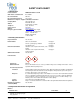

REDIPOXY Adhesive Part A
917127 Version #: 02 Revision date: 25-November-2013 Issue date: 25-November-2013
SDS US
4 / 7
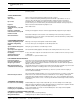
Partition coefficient
(n-octanol/water)
Not available.
Auto-ignition temperature
Not available.
Decomposition temperature
Not available.
Viscosity
Not available.
10. Stability and reactivity
Reactivity
The product is stable and non-reactive under normal conditions of use, storage and transport.
Chemical stability
Material is stable under normal conditions.
Possibility of hazardous
reactions
No dangerous reaction known under conditions of normal use.
Conditions to avoid
Heat, flames and sparks. Contact with incompatible materials.
Incompatible materials
Alkaline metals. Oxidizing agents. Strong acids.
Hazardous decomposition
products
Carbon dioxide (CO2). Carbon monoxide. Nitrogen oxides.
11. Toxicological information
Information on likely routes of exposure
Ingestion
May cause burns of the gastrointestinal tract if swallowed.
Inhalation
May cause respiratory irritation.
Skin contact
Causes skin burns. May cause an allergic skin reaction.
Eye contact
Causes serious eye damage.
Symptoms related to the
physical, chemical and
toxicological characteristics
Rash. Corrosive effects. Symptoms may include stinging, tearing, redness, swelling, and blurred
vision. Permanent eye damage including blindness could result.
Information on toxicological effects
Acute toxicity
May cause discomfort if swallowed.
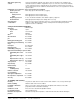
Components Species
2-Piperazin-1-ylethylamine (CAS 140-31-8)
Acute
Dermal
LD50 Rabbit
Fatty acids, tall-oil, reaction products with tetraethylenepentamine (CAS 68953-36-6)
Acute
Oral
LD50 Rat
Tetraethylene pentamine (CAS 112-57-2)
Acute
Dermal
LD50 Rabbit
Oral
LD50 Rat
Skin corrosion/irritation
Causes severe skin burns and eye damage.
Test Results
880 mg/kg
> 2000 mg/kg
0.66 g/kg
2.1 g/kg
Serious eye damage/eye
irritation
Respiratory or skin sensitization
Causes serious eye damage.
Respiratory sensitization
No data available.
Skin sensitization
May cause an allergic skin reaction.
Germ cell mutagenicity
No data available to indicate product or any components present at greater than 0.1% are
mutagenic or genotoxic.
Carcinogenicity
This product is not considered to be a carcinogen by IARC, ACGIH, NTP, or OSHA.
Reproductive toxicity
Not classified.
Specific target organ toxicity -
single exposure
Specific target organ toxicity -
repeated exposure
May cause respiratory irritation.
No data available.
Aspiration hazard
Not classified.