
FAQ

REDIPOXY Adhesive Part C
917137 Version #: 01 Revision date: - Issue date: 10-March-2014
SDS US
5 / 7
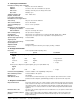
Carcinogenicity
May cause cancer. In 1997, IARC (the International Agency for Research on Cancer) concluded
that crystalline silica inhaled from occupational sources can cause lung cancer in humans.
However in making the overall evaluation, IARC noted that "carcinogenicity was not detected in all
industrial circumstances studied. Carcinogenicity may be dependent on inherent characteristics of
the crystalline silica or on external factors affecting its biological activity or distribution of its
polymorphs." (IARC Monographs on the evaluation of the carcinogenic risks of chemicals to
humans, Silica, silicates dust and organic fibres, 1997, Vol. 68, IARC, Lyon, France.) In June
2003, SCOEL (the EU Scientific Committee on Occupational Exposure Limits) concluded that the
main effect in humans of the inhalation of respirable crystalline silica dust is silicosis. "There is
sufficient information to conclude that the relative risk of lung cancer is increased in persons with
silicosis (and, apparently, not in employees without silicosis exposed to silica dust in quarries and
in the ceramic industry). Therefore, preventing the onset of silicosis will also reduce the cancer
risk..." (SCOEL SUM Doc 94-final, June 2003) According to the current state of the art, worker
protection against silicosis can be consistently assured by respecting the existing regulatory
occupational exposure limits. Occupational exposure to respirable dust and respirable crystalline
silica should be monitored and controlled.
IARC Monographs. Overall Evaluation of Carcinogenicity
Silica sand (CAS 14808-60-7) 1 Carcinogenic to humans.
Titanium dioxide (CAS 13463-67-7) 2B Possibly carcinogenic to humans.
NTP Report on Carcinogens
Silica sand (CAS 14808-60-7) Known To Be Human Carcinogen.
Reproductive toxicity
Based on available data, the classification criteria are not met.
Specific target organ toxicity -
single exposure
Specific target organ toxicity -
repeated exposure
No data available.
May cause damage to organs (Lung) through prolonged or repeated exposure.
Aspiration hazard
Due to the physical form of the product it is not an aspiration hazard.
Chronic effects
Crystalline silica: Overexposure to the respirable dust of crystalline silica (quartz or cristobalite,
less than or equal to 5 microns in size) may lead to silicosis in humans, which is a progressive and
irreversible lung disease.
Further information
No other specific acute or chronic health impact noted.
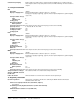
12. Ecological information
Ecotoxicity
Not expected to be harmful to aquatic organisms.
Persistence and degradability
The product contains inorganic compounds which are not biodegradable.
Bioaccumulative potential
The product is not expected to bioaccumulate.
Mobility in soil
The product is not mobile in soil.
Other adverse effects
No other adverse environmental effects (e.g. ozone depletion, photochemical ozone creation
potential, endocrine disruption, global warming potential) are expected from this component.
13. Disposal considerations
Disposal instructions
Dispose of contents/container in accordance with local/regional/national/international regulations.
Hazardous waste code
The waste code should be assigned in discussion between the user, the producer and the waste
disposal company.
Waste from residues / unused
products
Dispose of in accordance with local regulations. Empty containers or liners may retain some
product residues. This material and its container must be disposed of in a safe manner (see:
Disposal instructions).
Contaminated packaging
Empty containers should be taken to an approved waste handling site for recycling or disposal.
Since emptied containers may retain product residue, follow label warnings even after container is
emptied.
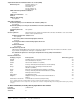
14. Transport information
DOT
Not regulated as dangerous goods.
IATA
Not regulated as dangerous goods.
IMDG
Not regulated as dangerous goods.
Transport in bulk according to
Annex II of MARPOL 73/78 and
the IBC Code
Not applicable.