
Specifications
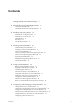
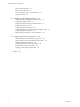

Table Of Contents
- Getting Started with VMware Player
- Contents
- Getting Started with VMware Player
- Introduction and System Requirements
- Installing and Using Player
- Creating Virtual Machines
- Understanding Virtual Machines
- Preparing to Create a Virtual Machine
- Create a Virtual Machine
- Use Easy Install to Install a Guest Operating System
- Install a Guest Operating System Manually
- Importing Virtual Machines
- Installing and Upgrading VMware Tools
- Installing VMware Tools
- Upgrading VMware Tools
- Configure Software Update Preferences
- Configure VMware Tools Updates for a Specific Virtual Machine
- Manually Installing and Upgrading VMware Tools
- Manually Install or Upgrade VMware Tools in a Windows Virtual Machine
- Manually Install or Upgrade VMware Tools in a Linux Virtual Machine
- Manually Install or Upgrade VMware Tools in a NetWare Virtual Machine
- Manually Install or Upgrade VMware Tools in a Solaris Virtual Machine
- Manually Install or Upgrade VMware Tools in a FreeBSD Virtual Machine
- Start the VMware User Process Manually If You Do Not Use a Session Manager
- Uninstall VMware Tools
- Virtual Machine Files
- Using Virtual Machines
- Starting Virtual Machines in Player
- Stopping Virtual Machines in Player
- Transferring Files and Text
- Using the Drag-and-Drop Feature
- Using the Copy and Paste Feature
- Using Shared Folders
- Mapping a Virtual Disk to the Host System
- Add a Host Printer to a Virtual Machine
- Using Removable Devices in Virtual Machines
- Install New Software in a Virtual Machine
- Changing the Virtual Machine Display
- Download a Virtual Appliance in Player
- Remove a Virtual Machine from the Library in Player
- Configuring and Managing Virtual Machines
- Change the Name of a Virtual Machine
- Change the Guest Operating System for a Virtual Machine
- Change the Working Directory for a Virtual Machine
- Change the Virtual Machine Directory for a Virtual Machine
- Change the Memory Allocation for a Virtual Machine
- Configuring Video and Sound
- Moving Virtual Machines
- Delete a Virtual Machine
- View the Message Log for a Virtual Machine
- Using the VIX API
- Configuring and Managing Devices
- Configuring DVD, CD-ROM, and Floppy Drives
- Configuring a USB Controller
- Configuring and Maintaining Virtual Hard Disks
- Configuring Virtual Ports
- Add a Virtual Parallel Port to a Virtual Machine
- Configure a Virtual Parallel Port on a Linux 2.6.x Kernel Host
- Configure Permissions for a Parallel Port Device on a Linux Host
- Troubleshoot ECR Errors for Parallel Ports
- Add a Virtual Serial Port to a Virtual Machine
- Change the Input Speed of a Serial Connection
- Configuring Generic SCSI Devices
- Configuring Eight-Way Virtual Symmetric Multiprocessing
- Configuring Keyboard Features
- Modify Hardware Settings for a Virtual Machine
- Configuring Network Connections
- Index

Disk Drive Requirements for Host Systems
Host systems must meet certain disk drive requirements. Guest operating systems can reside on physical
disk partitions or in virtual disk files.
Table 1‑1. Disk Drive Requirements for Host Systems
Drive Type Requirements
Hard disk
n
IDE, SATA, and SCSI hard drives are supported.
n
At least 1GB free disk space is recommended for each guest operating system
and the application software used with it. If you use a default setup, the
actual disk space needs are approximately the same as those for installing
and running the guest operating system and applications on a physical
computer.
n
For installation, approximately 200MB free disk space is required on Linux
and 250MB free disk space is required on Windows. You can delete the
installer after installation is complete to reclaim disk space.
Optical CD-ROM and DVD
n
IDE, SATA, and SCSI optical drives are supported.
n
CD-ROM and DVD drives are supported.
n
ISO disk image files are supported.
Floppy Virtual machines can connect to disk drives on the host computer. Floppy disk
image files are also supported.
Solid-State Drives
If your host machine has a physical solid-state drive (SSD), the host informs guest operating systems they
are running on an SSD.
This allows the guest operating systems to optimize behavior. How the virtual machines recognize SSD and
use this information depends on the guest operating system and the disk type of the virtual disk (SCSI,
SATA, or IDE).
n
On Windows 8, Ubuntu, and Red Hat Enterprise Linux virtual machines, all drive types can report their
virtual disks as SSD drives.
n
On Windows 7 virtual machines, only IDE and SATA virtual disks can report their virtual disks as SSD.
SCSI virtual disks only report as SSD when used as a system drive in a virtual machine, or as a
mechanical drive when used as a data drive inside a virtual machine.
n
On Mac virtual machines, only SATA virtual disks are reported as SSD. IDE and SCSI virtual disks are
reported as mechanical drives.
Use the virtual machine operating system to verify your virtual machine is using SSD as its virtual disk.
Local Area Networking Requirements for Host Systems
You can use any Ethernet controller that the host operating system supports.
Non-Ethernet networks are supported by using built-in network address translation (NAT) or by using a
combination of host-only networking and routing software on the host operating system.
Help System Requirements
You must have a supported Web browser installed on the host system to use the Player Help system
The following Web browser versions are supported.
n
Internet Explorer 6 or later
n
Mozilla Firefox 1.x or later
Chapter 1 Introduction and System Requirements
VMware, Inc. 9