
Specifications


MODULAR LIGHT TOWER — PARTS & OPERATION MANUAL — REV. #3 (06/26/06) — PAGE 25
Brakes
If your trailer has a braking system, the brakes should be
inspected the first 200 miles of operation. This will allow the
brake shoes and drums to seat properly. After the first 200
mile interval, inspect the brakes every 3,000 miles. If driv-
ing over rough terrain inspect brakes more frequently.
Electric Brakes
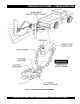
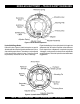
Electrically actuated brakes (Figure 8) are similar to hydrau-
lic brakes. The basic difference is that hydraulic brakes are
actuated by
pressure
, while electric brakes are actuated by
an
electromagnet.
Listed below are some of the advantages that electric brakes
have over hydraulic brakes:
■
Brake system can be manually adjusted to provide the
corrected braking capability for varying road and load
conditions.
■
Brake system can be modulated to provide more or less
braking force, thus easing the break load on the towing
vehicle.
■
Brake system has very little lag time between the time the to
vehicle's brakes are actuated and the trailer's brakes are
actuated.
■
Brake system can provide an independent emergency brake
system.
Remember in order to properly synchronize the tow vehicle's
braking to that of the trailer's braking, can only be accom-
plished by road testing. Brake lockup, grabbiness or harsh-
ness is due to lack of synchronization between the tow ve-
hicle and the trailer being towed or under-adjusted brakes.
Before any brake synchronizations adjustments can be
made, the trailer brakes should be burnished-in by applying
the brakes 20-30 times with approximately a 20 mph de-
crease in speed, e.g. 40 mph to 20 mph. Allow ample time
for brakes to cool between application. This allows the brake
shoes to slightly be seated into the brake drum surface.
Figure 8 display's the major electric brake components that
will require inspection and maintenance. Please inspect
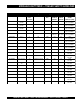
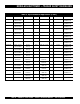
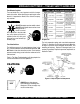
these components as required. Reference Table 7 for elec-
tric brake troubleshooting guidelines.
Electric Brake Adjustment
1. Place the trailer on jack stands. Make sure that the jack stands
are placed on secure level ground.
2. Check the wheel and drum for free rotation.
3. Remove the adjusting hole cover from the adjusting slot at
the bottom brake backing plate.
4. With a screwdriver or standard adjusting tool, rotate the star
wheel of the adjuster assembly to expand the brake shows.
5. Adjust the brake shoes outward until the pressure of the
lining against the wheel drum makes the wheel difficult to
turn.
6. Rotate the star wheel in the opposite direction until the wheel
rotates freely with slight lining drag.
7. Replace the adjusting hole cover and lower the trailer to the
ground.
8. Repeat steps 1 through 6 on the remaining brakes.
MODULAR LIGHT TOWER — TRAILER SAFETY GUIDELINES