
Specifications


PAGE 22 — MODULAR LIGHT TOWER — PARTS & OPERATION MANUAL — REV. #3 (06/26/06)
MODULAR LIGHT TOWER — TRAILER SAFETY GUIDELINES
Trailer Safety Precautions
CAUTION :CAUTION :
CAUTION :CAUTION :
CAUTION :
This section is intended to provide the user with trailer
service and maintenance information. The service and
maintenance guidelines referenced in this section apply to
a wide range of trailers. Remember periodic inspection of
the trailer will ensure safe towing of the equipment and will
prevent damage to the equipment and personal injury.
It is the purpose of this section to cover the major
maintenance components of the trailer. The following trailer
components will be discussed in this section:
■
Brakes
■
Tires
■
Lug Nut Torquing
■
Suspension
■
Electrical
■
Brake Troubleshooting Tables
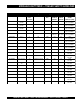
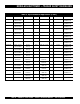
Use the following definitions when reading Tables 2.
1. Fuel Cell – Provides fuel for the equipment in use. Fuel
cells must be empty for transport when a common carrier
is required.
2. Braking System – System employed in stopping the
trailer. Typical braking systems are electric, surge, hy-
draulic, hydraulic-surge and air.
3. GVWR – Gross Vehicle Weight Rating (GVWR), is the
maximum number of pounds the trailer can carry, includ-
ing the fuel cell (empty).
4. Frame Length – This measurement is from the ball hitch
to the rear bumper (reflector).
5. Frame Width – This measurement is from fender to
fender.
6. Jack Stand – Trailer support device with maximum
pound requirement from the tongue of the trailer.
7. Coupler – Type of hitch used on the trailer for towing.
8. Tires Size – Indicates the diameter of the tire in inches
(10, 12, 13, 14, etc. ), and the width in millimeters (175,
185, 205 etc.). The tire diameter must match the
diameter of the tire rim.
9. Tires Ply – The tire ply (layers) number is rated in letters;
2-ply, 4-ply, 6-ply, 8-ply, 10-ply etc.
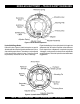
10. Wheel Hub – The wheel hub is connected to the trailer's
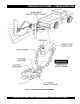
axle. See Figure 11.
11. Tire Rim – Tires are mounted on a tire rim. The tire rim
must match the size of the tire.
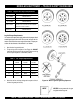
12. Lug Nuts – Used to secure the wheel to the wheel hub.
Always use a torque wrench to tighten down the lug nuts.
See Table 4 and Figure 10 or lug nut tightening and
sequence.
13. Axle – Indicates the maximum weight the axle can
support in pounds, and the diameter of the axle ex-
pressed in inches (see Table 2). Please note that some
trailers have a double axle. This will be shown as 2-6000
lbs, meaning two axle's with a total weight capacity of
12,000 pounds.
14. Suspension – Protects the trailer chassis from shocks
transmitted through the wheels. Types of suspension
used are leaf, Q-flex, and air-ride.
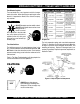
15. Electrical – Electrical connectors (looms) are provided
with the trailer so that brake lights and turn signal lights
can be connected to the towing vehicle. See Figure 12
for proper wiring connections.
16. Application– Indicates which units can be employed on
a particular trailer.
ALWAYS make sure that the trailer is in good
operating condition. Check the tires for proper
inflation and wear. Also check the wheel lug
nuts for proper tightness.