
Specifications




PAGE 20 — MODULAR LIGHT TOWER — PARTS & OPERATION MANUAL — REV. #3 (06/26/06)
MODULAR LIGHT TOWER — TOWING GUIDELINES
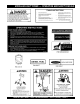
To reduce the possibility of an accident while transporting
the light tower on public roads, always make sure that the
trailer and the towing vehicle are in good operating condition
and both units are mechanically sound.
The following list of suggestions should be used when towing
the light tower:
CAUTION:CAUTION:
CAUTION:CAUTION:
CAUTION:
Towing Safety Precautions
■
Check with your county or state safety
towing regulations department before
towing your
light tower
.
■
Make sure that the hitch and coupling of the towing vehicle
are rated equal to, or greater than the trailer "gross vehicle
weight rating" (GVWR). See Table 2 (Trailer Specifications/
Application).
■
ALWAYS inspect the hitch and coupling for wear. NEVER
tow the light tower's trailer with defective hitches, couplings,
chains etc.
■
CHECK the tire air pressure on both the towing vehicle and
the trailer. Also check the tire tread wear on both vehicles.
■
ALWAYS make sure the trailer section of the light tower is
equipped with a "Safety Chain".
■
ALWAYS attach trailer's safety chain to frame of towing
vehicle.
■
ALWAYS make sure that the vehicle and trailer directional,
backup, brake, and trailer lights are connected properly and
are working properly.
■
Remember in most cases the maximum speed unless
otherwise posted for highway towing is 45 MPH, however
before towing your light tower, check your local state, and
county vehicle towing requirements. Recommended off-road
towing is not to exceed 10 MPH or less depending on type of
terrain.
■
Place
chocked blocks
underneath wheel to prevent
rolling,
while parked.
■
Depending on soil conditions and location it may be
necessary to place
support blocks
underneath the trailer's
bumper to prevent
tipping
, while parked.
■
Inflate tires to correct pressure, inspect tires for cuts, and
excessive wear. See Table 3 (Tire Wear Troubleshooting).
Light Tower Trailer Vehicle Connection
1. Check the vehicle hitch ball, and trailer coupler for signs
of wear or damage. Replace any parts that are worn or
damaged before towing.
2. Use only the 2-inch ball diameter as indicated on the
trailer's coupler. Use of any other ball diameter will create
an extremely dangerous condition which can result in
separation of the coupler and ball or ball failure.
3. Be sure the coupler is secured to the hitch ball and the
lock lever is down (locked).
4. Attach safety chains as shown in Figure 7. Remember
to
cross
the safety chains.
5. After towing for about 50 miles recheck the entire towing
system for tightness.
Recommended Maintenance
1. Smear ball socket and clamp face with chassis grease.
Periodically oil pivot points and were surfaces of coupler
with SAE 30 W motor oil.
2. When parking or storing the light tower, keep the coupler
off the ground so dirt and other debris will not build up in
the ball socket.
CAUTION:CAUTION:
CAUTION:CAUTION:
CAUTION:
If the trailer coupler is deformed replace entire
coupler. NEVER tow the light tower with a
defective trailer coupler. There exist the
possibility of the trailer separating from the
towing vehicle.
■
Check wheel mounting lug nuts with a torque wrench.
Torque wheel lug nuts as described in the "
Lug Nut Torque
Requirements
", Table 4 .
■
Make sure brakes are synchronized (electric only) and
functioning properly.
■
Check tightness of hanger bolt, shackle bolt, and U-blots
nuts, torque suspension hardware per Table 5.
■
Avoid sudden stops and starts. This can cause skidding, or
jackknifing. Smooth, gradual starts and stops will improve
gas milage.
■
Avoid sharp turns to prevent rolling.
■
Remove wheel stand when transporting.
■
DO NOT transport light tower with fuel in the welder/generator
fuel tank.