
Wiring Diagram


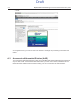


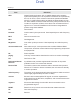


MN003109A01_aa
7-2 Best Practices: Installation & Troubleshooting
Check Physical Installation of Radio Ground and Radio Accessory Wiring
7.2 Check Physical Installation of Radio Ground and Radio Accessory
Wiring
• Take care to scrape away paint on the chassis at the place where the ground connection is to
be made, and try to keep the ground lead as short as possible.
NOTE: Some vehicles have dedicated ground points. If available, use the ground points for the radio
ground connection.
• Verify that the A+ lead (red) is connected directly to the positive terminal of the battery and
the ground lead (black) is connected to the vehicle chassis using as short of a length of wire
as is practical.
• For vehicles that have other types of electronic equipment installed (lights, flashers,
computers siren/PA and others), use a separate ground for the mobile radio equipment.
• Make sure that the mobile radio antenna is the minimum required distance (three feet) from
the mobile radio equipment to prevent radio frequency interference (RFI) from interfering
with the radio and/or accessories.
NOTE: If multiple radios/antennas are installed, ensure that the minimum antenna separation
requirements are met.
• Do not coil up any excess length of the A+ (red) lead. Doing this may cause a large transient
voltage to be produced when there is a high current drain (e.g. during transmit). This could
cause the radio to reset when the push-to-talk (PTT) is depressed.
• For mid power radios, make sure that the antenna ground connection is solid for motorcycle
mounted radios. An intermittent ground connection can cause the transmission to be
distorted when the motorcycle engine is running.
• Do not coil up any excessive length of antenna cable, if possible. It may affect the radio
receive performance.
• If an extra length of cable is used to extend the microphone, make sure the added
capacitance does not interfere with the operation of the radio.
7.3 Improve the Electrical Quality of the Power and Ignition Lines
• Use a relay to isolate the vehicle ignition switch point (ACC) from the radio ignition sense
point. Control this relay from the vehicle ignition switch point (ACC). Supply a cleaner voltage
from the positive terminal of the battery into the relay, which is attached to the radio ignition
sense point. Now the ACC line toggles the relay, instead of directly toggling the radios
ignition sense line.
• Install a Power Line Filter between the A+ lead and the positive terminal of the battery. This is
intended to filter the battery power applied to the transmitter power amplifiers. Pay extra
caution to this because the series filter introduces a negative spike when the radio transmits
that may cause problems with radio operation.
• For vehicles that use electromechanical relays to control external devices (lights, motors,
switch boxes and others), these relay circuits should be isolated as best as possible from the
mobile radio equipment. Also, diode suppression should be used across the relay contacts to
minimize the noise produced by the collapsing magnetic field.
• If the ignition sense switch is to be used, make sure that there is not a large voltage drop
between the A+ point (usually the positive terminal of the battery) and the ignition sense
point. In general, the voltage difference between these two points, should not be greater than
1.5 volts when all accessories/air-conditioner, others are turned on. Refer to the Basic
Service Manual for specifications for minimum and maximum voltage levels. Typical battery
voltage levels are 13.6V +/- 20%.
Draft