
User's Guide
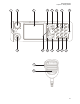


Table Of Contents
- Contents
- List of Figures
- List of Tables
- Declaration of Conformity
- Safety Information
- Notice to Users (FCC and Industry Canada)
- Copyrights
- General Information
- Getting Started
- 2.1 Product Technical Information
- 2.2 Before Power On
- 2.3 Controls and Indicators
- 2.4 Powering On the Radio
- 2.5 Writing Text
- 2.6 PIN Code Authentication
- 2.7 Locking or Unlocking the Keys or Buttons
- 2.8 Display
- 2.9 Status Icons
- 2.10 During a Call
- 2.11 Entering TMO or DMO Mode
- 2.12 Selecting Talkgroups
- 2.13 Using Timed Talkgroup Change
- 2.14 One-Touch Buttons
- Modes
- 3.1 Trunked Mode Operation
- 3.2 Local Site Trunking
- 3.3 Direct Mode Operation
- 3.3.1 Entering DMO Mode
- 3.3.2 Making Group Calls in DMO
- 3.3.3 Receiving Group Calls in Idle
- 3.3.4 Selecting DMO Communications Options
- 3.3.5 Private Call With Presence Check
- 3.3.6 DMO Private Priority Call
- 3.3.7 Talkgroup for Individual Calls
- 3.3.8 Network Monitor
- 3.3.9 Communication through Repeaters
- 3.3.10 Communication through Gateways
- 3.3.11 Gateway and Repeater Synchronization
- 3.4 Transmit Inhibit Mode
- 3.5 Emergency Operations
- 3.5.1 Emergency Alarm
- 3.5.2 Emergency Group Call
- 3.5.3 Non-Tactical Emergency
- 3.5.4 Emergency Individual Calls (Private or MSISDN)
- 3.5.5 Emergency SDS Status
- 3.5.6 Emergency Hot Microphone
- 3.5.7 Alternating Hot Microphone
- 3.5.8 Silent Emergency Mode
- 3.5.9 Invisible Emergency
- 3.5.10 Emergency Alert
- 3.5.11 Emergency Mode by Dialing
- 3.5.12 Disaster Alert
- 3.5.13 Emergency Destination in Local Site Trunking
- 3.5.14 Exiting Emergency Operations
- 3.6 Repeater Mode
- 3.7 Gateway Mode
- Main Menu
- 4.1 Scrolling through the Menu
- 4.2 Menu Icons
- 4.3 Messages
- 4.4 Contacts
- 4.5 Browser
- 4.6 Security
- 4.7 Setup
- 4.8 Group Setup
- 4.9 Individual Setup
- 4.10 Favorites
- 4.11 My Info
- 4.12 Recent Calls
- 4.13 Shortcuts
- 4.14 Radio User Identity (RUI)
- 4.15 Networks
- 4.16 Location
- 4.17 Packet Data
- Features
- 5.1 Ambience Listening (AL) Call
- 5.2 Buffer Full Overwrite Policy
- 5.3 Call-Out
- 5.4 DTMF Overdial
- 5.5 Dual Control Head
- 5.6 Global Navigation Satellite System (GNSS) Location Service
- 5.7 Home Display Text Message
- 5.8 Horn and Lights Alarm
- 5.9 Individual Call
- 5.10 Multi Radio Control
- 5.11 OEM Control Head
- 5.12 One-Touch Dial
- 5.13 Radio Messaging System (RMS)
- 5.14 Radio User Assignment (RUA) and Radio User Identity (RUI)
- 5.15 Shadow Groups (Address Bundle)
- 5.16 Short Number Dial
- 5.17 Talkgroup Dialing by Index
- 5.18 Terminal Permanent Disable
- 5.19 Terminal Temporary Disable or Enable
- 5.20 Wireless Application Protocol (WAP)
- 5.20.1 WAP Browser
- 5.20.2 Entering the Browser
- 5.20.3 Entering Browser Menu Panes
- 5.20.4 Tips for Browsing
- 5.20.5 Disabled Packet Data Service
- 5.20.6 Disabled Browser Entry
- 5.20.7 Browser Keys Usage
- 5.20.8 Browser Menu Panes Overview
- 5.20.9 Navigate Pane
- 5.20.10 Advanced...
- 5.20.11 Bookmarks Pane
- 5.20.12 History Pane
- 5.20.13 Tools Pane
- 5.20.14 Options Pane
- 5.20.15 Text Input Pane
- 5.20.16 WAP Push
- Appendix A: Tones
- Appendix B: LED Indications
- Appendix C: Troubleshooting
- Appendix D: Audio Routing and PTT Hook Interactions

Annotation Description
• Press and hold to turn on your radio.
• Rotate to set the volume.
•
Press and rotate to select a different talkgroup.
• Press and hold the Rotary Knob to lock/unlock it. Powering off also unlocks a
locked Rotary Knob.
• Press to make the Rotary Knob operate like left/right navigation keys.
17 Hook
18 Emergency button
Press and hold Emergency button to enter Emergency operation. By default,
when your radio is off, press and hold to Power On in Emergency Mode.
19 LED Status Indicator
NOTICE:
• It is recommended to turn off the terminal before connecting any of the accessories.
•
A detailed list of compatible accessories is included in Accessory Leaflet, part number:
68015000182. To obtain the document, contact your service provider.
2.4
Powering On the Radio
Procedure:
1 Press and hold On button.
IMPORTANT: Do not press any key until the radio is powered up.
Your radio performs a self-check and registration routine.
After successful registration, your radio is in service.
NOTICE: Your radio powers on without visible and audible notification if Covert Mode is
activated.
2.5
Writing Text
This section provides information on entering texts on your radio.
2.5.1
Text Entry Icons
In the text entry screen, icons tell you which text entry mode and method you are using. A character
counter displayed on the text entry icon indicates the amount of characters that can be entered.
Press the # key to toggle through the text entry modes.
Symbolic Icon Description
Enter punctuation and symbols.
68015000180-MG
Chapter 2: Getting Started
27