
User's Manual




12
5. Bounced Flash
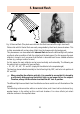
Fig. 9: Bounced flash (The photo was shot with the flash bounced off the right-hand wall)
Photos shot with full frontal flash are easily recognizable by their harsh, dense shadows. This
is often associated with a sharp drop of light from the foreground to the background.
This phenomenon can be avoided with bounced flash because the diffused light will produce
a soft and uniform rendition of both the subject and the background. For this purpose the main
reflector is turned in such a manner that the flash is bounced back from a suitable reflective
surface (e.g. ceiling or walls of a room).
For this reason the main reflector can be turned vertically and horizontally. The following are
the vertical lock-in positions for bounced flash:
• 15°, 30°, 45°, 60°, 75° and 90° (simply tilt the reflector to the required angle)
The head can be swivelled horizontally to the left and right by 180°, and locks into position at
90° and 180°.
When swivelling the reflector vertically, it is essential to ensure that it is turned by
a sufficiently wide angle so that direct light can no longer fall on the subject.
Therefore, always tilt the reflector to at least the 60° lock-in position.
The diffused light bounced back from the reflective surfaces results in a soft illumination of the
subject.
The reflecting surface must be white or a neutral colour, and it must not be structured (e.g.
wooden beams in the ceiling) as this could cast shadows. For colour effects just select
reflective surfaces in the required colour.
☞