
Owners Manual


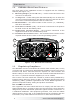

Table Of Contents

2 © 2017 Sensata Technologies
I nt roduct ion
1 .2 CSW 2 0 2 4 Back Pane l Feat ur e s
The back panel of the CSW2024 inverter is equipped with the following
features (See Figure 1-2):
8 . Moun t ing Flange s ( fr ont and rea r) – used to mount and secure the
inverter to a shelf/wall.
9 . Cooling Fa ns – intake cooling fans that automatically turn on when the
inverter’s internal temperature rises above a safe level, and turn off when
the inverter’s internal temperature falls to a safe level.
1 0 . Model N u m ber – the model number of the inverter (i.e., CSW2024),
and other information.
1 1 . DC Posit ive Ter m inal ( r e d) – the inverter’s connection to the positive
terminal on the 24 VDC battery bank.
1 2 . DC N e gat ive Ter m ina l ( black ) – the inverter’s connection to the
negative terminal on the 24 VDC battery bank.
1 3 . DC Cha ssis Ground Connection – the connection that is used to tie the
exposed chassis of the inverter to the DC grounding system.
Red
Black
24 Volt
Battery only
Model: CSW2024 Input: 25 VDC, 93A continuous
da m age u nit.
RE CO GNIZED
COMPONENT
Warni ng: Do not operate or install on or above combustible surfaces. Reverse polarity will
8
1 0
9
1 2
1 1
1 3
Figur e 1 - 2 , Ba ck Pan el Fea t ur es
1 .3 Regula t ory Com pliance
The CSW2024 inverter is intended to be used for land vehicles (RVs, trucks)
or marine craft. It is listed to UL Standard 458, 5th Edition (Power Converters/
Inverters and Power Converter/Inverter Systems for Land Vehicles and
Marine Crafts) for use in the US; and is also certifi ed to CSA Standard C22.2
No. 107.1-01 (General Use Power Supplies) for use in Canada.
This inverter has been tested and certifi ed to product safety standards by
Intertek Testing Services (known as ETL)—a Nationally Recognized Testing
Laboratory (NRTL) qualified organization that meets OSHA regulations to
perform independent safety testing and product certifi cation.
FCC an d EM C I nform at ion
This equipment has been tested and found to comply with the limits for a
Class B digital device, pursuant to part 15 of the FCC Rules. These limits are
designed to provide reasonable protection against harmful interference in
a residential installation. This equipment generates, uses, and can radiate
radio frequency energy and, if not installed and used in accordance with the
instructions, may cause harmful interference to radio communications.