Kodak EasyShare C653/C623 zoom digital camera User’s guide www.kodak.com For interactive tutorials, www.kodak.com/go/howto For help with your camera, www.kodak.com/go/c653support or www.kodak.
Eastman Kodak Company Rochester, NY 14650 © Eastman Kodak Company, 2006 All screen images are simulated. Kodak, EasyShare, and Perfect Touch are trademarks of Eastman Kodak Company.
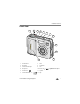
Product features Front view 1 2 3 4 5 6 7 8 9 10 11 12 1 2 3 Shutter button Mode dial Self-timer/Video light 4 Microphone 5 6 Flash button Self-timer/Burst button www.kodak.
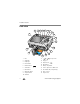
Product features Back view 2 3 4 5 6 7 8 1 9 10 11 12 13 19 14 18 17 ii 16 15 1 LCD 11 4-way arrows 2 3 Viewfinder Ready light 13 USB, A/V Out 4 Review button 5 6 7 8 9 10 LCD/Info button Share button Delete button Wide angle button Telephoto button OK button 12 Strap post 14 15 16 17 18 19 Menu button Battery compartment Slot for optional SD or MMC card SD or MMC card (sold separately) Dock connector Tripod socket www.kodak.
Table of contents 1 1 Setting up your camera .........................................................................1 Attaching the strap ....................................................................................... 1 Loading the battery ....................................................................................... 1 Turning on the camera .................................................................................. 2 Setting the language, date/time................................
Table of contents Understanding the review icons................................................................... 27 4 Transferring and printing pictures .......................................................28 Installing the software................................................................................. 28 Transferring pictures with the USB cable...................................................... 29 Printing pictures.........................................................................
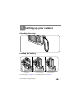
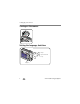
1 Setting up your camera Attaching the strap Loading the battery Ni-MH (rechargeable) CRV3 lithium (non-rechargeable) 2 AA (rechargeable or non-rechargeable) For battery types, see page 58. To extend battery life, see page 61. www.kodak.
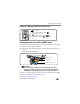
Setting up your camera Turning on the camera Setting the language, date/time 1 to change. for previous/next field. 2 OK to accept. OK (press) 2 www.kodak.
Setting up your camera Setting the language, date/time at other times 1 Press Menu. 2 to highlight Setup Menu then press OK. 3 to highlight Language or Date/Time , then press OK. Storing pictures on an SD or MMC card Your camera has 32 MB of internal memory. You can purchase an SD or MMC card to conveniently store more pictures and videos. NOTE: When using the card for the first time, format the card in this camera before taking pictures (see page 39). We recommend Kodak SD or MMC cards.
2 Taking pictures/videos Picture-taking modes Choose the mode that best suits your subjects and surroundings. Use this mode Auto For General picture-taking—offers an excellent balance of image quality and ease of use. Anti-Blur Minimizing the effects of camera shake and subject movement. Close-up Close range. Use available light instead of flash if possible. The camera automatically sets the focus distance depending on the zoom position.
Taking pictures/videos Scene modes 1 Turn the Mode dial to Scene . 2 Press to display Scene mode descriptions. NOTE: If the Help text turns off, press the OK button. 3 Press the OK button to choose a Scene mode. Use this For SCN mode Hi-ISO Portrait Panorama Left-Right Low-light conditions using a higher ISO. Full-frame portraits of people. Stitching up to 3 captured images from left to right into one image. Panorama Right-Left Stitching up to 3 captured images from right to left into one image.
Taking pictures/videos Use this For SCN mode SelfPortrait Children Close-ups of yourself. Assures proper focus and minimizes red eye. Action pictures of children in bright light. Candle light Capturing the ambiance of candle light. Backlight Subjects that are in shadow or “backlit” (when light is behind the subject). Sunset Capturing the deep hues seen at sunset. 6 www.kodak.
Taking pictures/videos Taking a picture 1 2 3 LCD/Info Use the LCD or viewfinder. Press to turn on/off: • LCD (LCD off to use viewfinder) • Status icons • Framing grid • Help (when in Menu) Press the Shutter button halfway to focus and set exposure. When the Ready light turns green, press the Shutter button completely down. Using the framing marks to take pictures Framing marks indicate the camera focus area.
Taking pictures/videos Taking a video 1 2 Press the Shutter button completely down and release. To stop recording, press and release the Shutter button again. Reviewing the picture/video just taken After you take a picture or video, the LCD displays a quickview for approximately 10 seconds. If you press no buttons, the picture or video is saved. Tag a picture/video for email or as a favorite, or tag a picture for print. If you press no buttons, the picture/ video is saved. Delete Play a video.
Taking pictures/videos Understanding blur warning icons A picture blur warning icon is displayed during quickview and review. Green—Picture is sharp enough for an acceptable 4 x 6-inch (10 x 15 cm) print. Yellow—Picture may be sharp enough for an acceptable 4 x 6-inch (10 x 15 cm) print or sharpness is not determined. Red—Picture is not sharp enough for an acceptable 4 x 6-inch (10 x 15 cm) print. White—Printability is still being determined. www.kodak.com/go/support view single picture.
Taking pictures/videos Using optical zoom Use optical zoom to get up to 3X closer to your subject. Optical zoom is effective when the lens is no closer than 24 in. (60 cm) to the subject or 5.1 in. (12.9 cm) in Close-up mode. You can change optical zoom before (but not during) video recording. 1 Use the viewfinder or LCD to frame your subject. 2 Press Telephoto (T) to zoom in. Press Wide Angle (W) to zoom out. The zoom indicator shows zoom status.
Taking pictures/videos Using the flash Use the flash when you take pictures at night, indoors, or outdoors in heavy shadows. Press the button repeatedly to scroll through flash modes (see Flash modes below). The current flash mode appears in the LCD screen. Flash-to-subject distance Zoom position Flash distance Wide angle 2–11.5 ft (0.6–3.5 m) @ ISO 200 Telephoto 2–6.6 ft (0.6–2.0 m) @ ISO 200 Flash modes Flash fires Auto When the lighting conditions require it.
Taking pictures/videos Using the self-timer Use the self-timer when you want to be included in a picture, or to ensure a steady Shutter button press. 1 Place camera on a tripod or flat surface.
Taking pictures/videos Using burst Option Description Purpose Camera takes up to 3 pictures while the Shutter button is Capture an expected pressed. event. Burst All the pictures are saved. 1 In most Still modes, press the Self-timer/Burst button NOTE: Burst is unavailable in Anti-Blur, Hi-ISO, and Panorama modes. Example: A person swinging a golf club. . 2 Press the Shutter button halfway to focus and set exposure. 3 Press the Shutter button completely down and hold it to take pictures.
Taking pictures/videos Using exposure compensation to adjust picture brightness In Auto, Landscape, Close-up, or Panorama mode, you can adjust exposure compensation before you take a picture to make your pictures darker or lighter. Only the first image in Panorama mode is adjusted. 1 Press to decrease exposure compensation. 2 Press to increase exposure compensation. An exposure compensation level between -2.0 and +2.0 is shown on the LCD as the LCD image gets darker or lighter.
Taking pictures/videos Taking panoramic pictures Use panorama to “stitch” up to 3 pictures into a panoramic scene. NOTE: For best results, use a tripod. Individual pictures are saved only when panorama capture is cancelled before stitching occurs. (Picture size is set to 3.1 MP for each picture. Exposure and white balance are set with the first picture. The flash is set to Off.) 1 Turn the Mode dial to SCN.
Taking pictures/videos Understanding the picture-taking icons In capture mode—no buttons pressed Flash Self-timer Date stamp Picture size Blur warning Pictures/time remaining Storage location Zoom: wide telephoto digital Exposure metering White balance ISO speed Low battery Camera mode Exposure compensation In capture mode—shutter pressed halfway Album Auto Exposure/ Auto Focus warning Low battery Exposure compensation 16 www.kodak.
3 Working with pictures/videos Reviewing pictures/videos Press the Review button to view and work with your pictures/videos. Press Review again to exit. 1 Press the Review button. 2 Press to view previous/next picture/video. To save battery power, use an optional Kodak EasyShare dock or Kodak 3-volt AC adapter. (See Review www.kodak.com/go/c653accessories or www.kodak.com/go/c623accessories. NOTE: Pictures taken at the 5.
Working with pictures/videos Playing a video 1 Press the Review button. 2 Press to locate previous/next video. 3 Press OK to play or pause a video. Playback speed 4X 2X 1X 2X Reverse 4X Forward 4 Press to adjust the audio volume. 5 Press during playback to play at 2X speed; press again for 4X. 6 Press 4X. to reverse at 2X speed; press again for Viewing thumbnails (multi-up) 1 Press the Review button. 2 Press to change from single-picture view to multi-up thumbnails.
Working with pictures/videos Deleting pictures/videos 1 Press the Review button. 2 Press for previous/next picture/video. 3 Press the Delete button. 4 Follow the screen prompts. NOTE: After you delete a picture/video, the next picture/video (overlaid with the Delete menu with the Undo Delete option) appears. If there are no more pictures/videos, the Delete menu on a blank screen appears. See Using the undo delete feature for more information.
Working with pictures/videos Protecting pictures/videos from deletion 1 Press the Review button. 2 Press for previous/next picture/video. 3 Press the Menu button. 4 Press to highlight Protect, then press OK. The picture/video is protected and cannot be deleted. The Protect icon appears with the protected picture/video. To remove protection, repeat steps 1-4. The Protect icon is removed from the picture/video. ■ Press the Menu button to exit the menu.
Working with pictures/videos Cropping pictures You can crop a picture so that only the desired portion of the picture remains. 1 Press the Review button, then picture. Picture Cropped picture to find a 2 Press the Menu button, choose Crop, then press the OK button. 3 Press Telephoto (T) to zoom in, or to move the crop box. Press OK. 4 Follow the screen prompts. The picture is cropped. The original is saved. (Cropped pictures cannot be cropped again.) ■ Press the Menu button to exit the menu.
Working with pictures/videos Editing videos Making a picture from a video You can choose a single frame from a video, then make a picture suitable for printing. 1 Press the Review button, then to find a video. 2 Press the Menu button, choose Make Picture, then press the OK button. Video Picture 3 Press OK to select a video frame, then press . 4 Follow the screen prompts. A picture is created. (The original video is saved.) ■ Press the Menu button to exit the menu.
Working with pictures/videos Making a video action print From a video, you can make a 4-, 9-, or 16-up picture, suitable for a 4 x 6-inch (10 x 15 cm) print. 1 Press the Review button, then video. Video 4-, 9-, or 16-up picture to find a 2 Press the Menu button, choose Edit Video, then press the OK button. Choose Action Print, then press the OK button. 3 Choose an option, then press the OK button. Auto options: The camera includes the first and last frames, then 2, 7, or 14 equally spaced frames.
Working with pictures/videos Changing the slide show display interval The default interval setting displays each picture for 5 seconds. You can set the display interval from 3–60 seconds. 1 On the Slide Show menu, press button. to highlight Interval, then press the OK 2 Select a display interval. To scroll through the seconds quickly, press and hold . 3 Press the OK button. The interval setting remains until you change it.
Working with pictures/videos Displaying pictures and videos on a television You can display pictures/videos on a television, computer monitor, or any device equipped with a video input. To connect the camera to a television, use the A/V (audio/video) cable (may be sold separately). NOTE: Ensure that the Video Out setting (NTSC or PAL) is correct (see page 38). The slide show stops if you connect a cable while the slide show is running.
Working with pictures/videos Copying pictures/videos You can copy pictures/videos from a card to internal memory or from internal memory to a card. Before you copy, make sure that: ■ A card is inserted in the camera. ■ The camera’s image storage location is set to the location from which you are copying (see page 36). Copy pictures/videos: 1 Press the Review button, then the Menu button. 2 Press to highlight Copy 3 Press to highlight an option. , then press the OK button. 4 Press the OK button.
Working with pictures/videos Understanding the review icons Pictures Print tag/number of prints Protected Favorite tag Email tag Blur warning Kodak Perfect Touch Picture number Image storage location Album Scroll arrows Review mode Videos Video length Favorite tag Video number Email tag Image storage location Date/Time Review mode Scroll arrows www.kodak.
4 Transferring and printing pictures Installing the software CAUTION: Install EasyShare software before connecting the camera to the computer. Failure to do so may cause the software to load incorrectly. 1 Close all software applications that are open on your computer (including anti-virus software). 2 Place the EasyShare software CD into the CD-ROM drive. 3 Load the software: Windows OS—if the install window does not appear, choose Run from the Start menu and type d:\setup.
Transferring and printing pictures Transferring pictures with the USB cable 1 Turn off camera. 2 Connect USB cable (U-8). 3 Turn on camera. Kodak EasyShare software opens on your computer and prompts you through the transfer process. NOTE: Visit www.kodak.com/go/howto for an online tutorial on connecting. Also available for transferring You can also use these Kodak products to transfer your pictures and videos.
Transferring and printing pictures Printing pictures Printing with a Kodak EasyShare printer dock Dock your camera to the Kodak EasyShare printer dock and print directly—with or without a computer. Purchase this and other accessories at a dealer of Kodak products or visit www.kodak.com/go/c653accessories or www.kodak.com/go/c623accessories. Direct printing with a PictBridge enabled printer Your camera is compatible with PictBridge technology, so you can print directly to PictBridge enabled printers.
Transferring and printing pictures Printing from a PictBridge enabled printer 1 Turn on the printer. Turn on the camera. The PictBridge logo is displayed, followed by the current picture and menu. (If no pictures are found, a message is displayed.) If the menu interface turns off, press any button to redisplay it. 2 Press to choose a printing option, then press the OK button. Current Picture Press to choose a picture. Choose the number of copies.
Transferring and printing pictures Ordering prints online Kodak EasyShare Gallery (www.kodakgallery.com) is one of the many online print services offered in the Kodak EasyShare software. You can easily: ■ Upload your pictures. ■ Edit, enhance, and add borders to your pictures. ■ Store pictures, and share them with family and friends. ■ Order high-quality prints, photo greeting cards, frames, and albums—and have them delivered to your door.
5 Doing more with your camera Changing picture-taking settings You can change settings to get the best results from your camera: 1 Press the Menu button. 2 Press to highlight a setting, then press the OK button. 3 Choose an option, then press the OK button. 4 Press the Menu button to exit. NOTE: Some settings remain until you change them; others remain until you turn the Mode dial or turn off the camera. Some settings are unavailable in some modes.
Doing more with your camera Setting Options White Balance Auto (default)—automatically corrects white balance. Choose your lighting condition. Ideal for general picture taking. Daylight—for pictures in natural lighting. Tungsten—corrects the orange cast of household light bulbs. Ideal for indoor pictures under tungsten or halogen lighting without flash. Fluorescent—corrects the green cast of fluorescent lighting. Ideal for indoor pictures under fluorescent lighting without flash.
Doing more with your camera Setting Options Auto Focus Zone Select a large or concentrated area of focus. Multi-zone (default)—evaluates 5 zones to give an even picture focus. Ideal for general picture taking. Center-zone—evaluates the small area centered in the viewfinder. Ideal when precise focus of a specific area in the picture is needed. NOTE: For the best pictures, the camera is set to Multi-zone when in Landscape mode. Color Mode Choose color tones.
Doing more with your camera Setting Options Image Storage Choose a storage location for pictures/videos. Auto (default)—the camera uses the card if one is in the camera. If not, the camera uses internal memory. Internal Memory—the camera uses internal memory, even if a card is installed. NOTE: If you fill up your card while taking pictures, your camera’s memory plus feature prompts you to switch to internal memory, if space is available. Memory plus is unavailable in Video mode.
Doing more with your camera Customizing your camera Use Setup to customize your camera settings. 1 In any mode, press the Menu button. 2 Press to highlight Setup , then press the OK button. 3 Press to highlight the setting you wish to change, then press the OK button. 4 Choose an option, then press the OK button. 5 Press the Menu button to exit. NOTE: These settings remain until you change them. NOTE: Press the LCD/Info button for information about camera settings and options.
Doing more with your camera Setting Options Camera Sounds Choose sound effects. Theme—applies the same sound effect set to all functions. Individual—choose a sound effect for each function. Sound Volume Off Low (default) Medium High Date & Time See page 2. Auto Power Off 10 minutes Choose inactivity time until camera turns off. 5 minutes 3 minutes (default) 1 minute Video Out Choose the regional setting that lets you connect the camera to a television or other external device.
Doing more with your camera Setting Options Format Memory Card—deletes everything on the card; formats the card. CAUTION: Cancel—exits without making a change. Formatting deletes all Internal Memory—deletes everything in pictures/videos, including internal memory including email addresses, those that are protected. album names, and favorites; formats the Removing a card during internal memory. formatting may damage the card. About View camera information. www.kodak.
Doing more with your camera Pre-tagging for album names Use the Set Album (Still or Video) feature to pre-select album names before you take pictures or videos. Then, all the pictures or videos you take are tagged with those album names. First—on your computer Use the EasyShare software that was packaged with your camera to create album names on your computer. The next time you connect the camera to the computer, copy up to 32 albums to the album name list. See EasyShare software Help for details.
Doing more with your camera Tagging pictures/videos for albums Use the Album feature in Review mode to tag the pictures/videos in your camera with album names. First—on your computer Use EasyShare software to create albums on your computer, then copy up to 32 album names to the camera’s internal memory. See EasyShare software Help for details. Second—on your camera 1 Press the Review button, then locate the picture or video. 2 Press the Menu button.
Doing more with your camera Sharing your pictures Press the Share button to tag your pictures and videos. When they are transferred to your computer, you can share them. Use the Share button: ■ Any time. (The most recent picture/video taken is then displayed.) ■ Just after you take a picture/video, during quickview. ■ After pressing the Review button. Tagging pictures for printing 1 Press the Share button. Press 2 Press to highlight Print to locate a picture. , then press the OK button.
Doing more with your camera NOTE: For the best 4 x 6 in. (10 x 15 cm) prints, set the camera to the 5.4 MP (3:2) picture size setting. (See page 33.) Tagging pictures and videos for emailing First—on your computer Use Kodak EasyShare software to create an email address book on your computer. Then copy up to 32 email addresses to the camera’s internal memory. For details, click the Help button in EasyShare software. Second—tag pictures/videos on your camera 1 Press the Share button.
Doing more with your camera Tagging pictures as favorites You can preserve your favorite pictures in the Favorites section of your camera’s internal memory, then share them with friends and family. NOTE: When you transfer pictures from your camera to your computer, all pictures (including favorites) are stored on your computer at full size. Favorite pictures - smaller copies of your originals - are loaded back to your camera, so you can share and enjoy more. 1. Tag pictures as 1 Press the Share button.
Doing more with your camera Optional settings In Favorites mode, press the Menu button to access optional settings. Slide Show (page 23) Remove favorites (page 45) Multi-up (page 18) Setup Menu (page 37) NOTE: Pictures taken at the 5.4 MP (3:2) picture size setting are displayed at a 3:2 aspect ratio with a black bar at the top and bottom of the screen. Removing favorites from your camera 1 Turn the Mode dial to Favorites . 2 Press the Menu button.
Doing more with your camera Printing and emailing favorites 1 Turn the Mode dial to Favorites . Press to locate a picture. 2 Press the Share button. 3 Highlight Print or Email , then press the OK button. NOTE: Favorites that were taken on this camera (not imported from another source) are good for prints up to 4 x 6 in. (10 x 15 cm). 46 www.kodak.
6 Troubleshooting For step-by-step product support, visit www.kodak.com/go/c653support or www.kodak.com/go/c623support and select Interactive Troubleshooting & Repairs. Camera problems If... Try one or more the following Camera does not turn on. ■ Install new batteries (page 1). Camera does not turn off. ■ Remove the battery, then reinsert or replace it. If the camera still does ■ Charge rechargeable batteries. not function, visit www.kodak.com/go/c653support or www.kodak.
Troubleshooting If... Try one or more the following In Review mode, you do not see a picture (or the expected picture) on the LCD screen. In Review mode, a blue or black screen is displayed instead of a picture. Shutter button does not work. ■ Check the image storage location setting (see page 36). ■ Transfer the picture to the computer (page 29), then format the card in the camera (see page 39). Caution: Formatting a card deletes all pictures and videos, including protected files.
Troubleshooting If... Try one or more the following Picture is too dark. ■ Turn on the flash (page 11). ■ Move so there is no more than 11.8 ft (3.6 m) in wide angle and 6.9 ft (2.1 m) in telephoto between the camera and the subject. ■ Use Fill flash (see page 11) or change your position so light is not behind the subject. ■ Increase Exposure Compensation (page 14). Camera does not ■ Purchase a certified SD/MMC card. recognize ■ Reformat the card (see page 39). SD/MMC card.
Troubleshooting If... Try one or more of the following Ready light blinks ■ Camera is operating normally. green. Ready light blinks ■ Wait. Resume picture taking when the light stops blinking and turns amber. green. Ready light blinks ■ Install new batteries (page 1) or charge rechargeable batteries. red and camera turns off. Ready light glows ■ Transfer pictures to the computer (page 29), delete pictures from the steady red.
Troubleshooting If... Try one or more of the following Cannot transfer pictures. (The Add New Hardware Wizard cannot locate drivers.) ■ Disconnect USB cable. (If using camera dock or printer dock, disconnect cable and remove camera from dock). Close all open applications. Re-install the software (page 28). ■ Disconnect the USB cable. Close all open applications. Re-install the software (page 29). LCD screen messages If...
Troubleshooting If... Try one or more of the following Internal memory requires formatting Internal memory cannot be read (Please format internal memory) No memory card (Files not copied) Not enough space to copy files (Files not copied) Memory card is locked (Insert new memory card) Read-only memory card. Remove write protection to capture or write to card. Memory card is unusable (Insert new memory card) ■ Format the internal memory (see page 39).
Troubleshooting If... Try one or more of the following No album names on camera (Connect with computer to import album names) High camera temperature. (Camera will be turned off.) ■ Create and copy album names from computer. See the Kodak EasyShare software Help. ■ Leave the camera off until it’s cool to the touch, then turn it back on. If the message reappears, visit www.kodak.com/go/c653support or www.kodak.com/go/c623support and select Interactive Troubleshooting & Repairs.
7 Getting help Helpful links Camera Email, write, or phone customer support Get support for your product (FAQs, troubleshooting information, arrange for repairs, etc.) Purchase camera accessories (camera docks, printer docks, lenses, cards, etc.) Download the latest camera firmware and software See online demonstrations of your camera www.kodak.com/go/contact www.kodak.com/go/c653support or www.kodak.com/go/c623support www.kodak.com/go/c653accessories or www.kodak.com/go/c623accessories www.kodak.
Getting help NOTE: If you have questions concerning this product, you may speak with Kodak customer support. Australia Austria Belgium Brazil Canada China Denmark Ireland Finland France Germany Greece Hong Kong India Italy Japan Korea Netherlands 1800 147 701 0179 567 357 02 713 14 45 0800 891 4213 1 800 465 6325 800 820 6027 3 848 71 30 01 407 3054 0800 1 17056 01 55 1740 77 069 5007 0035 00800 44140775 800 901 514 91 22 617 5823 02 696 33452 03 5540 9002 080 708 5600 020 346 9372 www.kodak.
8 Appendix Camera specifications For more specifications, visit www.kodak.com/go/c653support or www.kodak.com/go/c623support. Kodak EasyShare C653/C623 zoom digital camera CCD (charge-coupled device) CCD 1/2.5 in. CCD, 4:3 aspect ratio Output image size 6.1 MP: 2848 x 2144 pixels 5.4 MP (3:2): 2848 x 1899 pixels 4.0 MP: 2304 x 1728 pixels 3.1 MP: 2048 x 1536 pixels 1.1 MP: 1200 x 900 pixels Displays Color display 6.1 cm (2.
Appendix Kodak EasyShare C653/C623 zoom digital camera Combined zoom Exposure Exposure metering Exposure compensation Shutter speed ISO speed Flash Electronic flash Flash modes Capture Capture modes Video capture Image file format Image storage 15X TTL-AE; Multi-pattern; Center-weighted; Center spot +/-2.0 EV with 1/3 EV steps Mechanical shutter with CCD electrical Auto: 4 - 1/1400 sec.
Appendix Kodak EasyShare C653/C623 zoom digital camera Internal storage 32 MB internal memory/22 MB available for image storage capacity (1 MB equals one million bytes) Review Quickview Yes Video output NTSC or PAL selectable Power 2 Kodak oxy-alkaline digital camera batteries AA ZR6 (non-rechargeable); 2-AA lithium digital camera batteries; 2-AA alkaline batteries; 2 Kodak Ni-MH rechargeable digital camera batteries AA; 1 Kodak lithium digital camera battery CRV3 (non-rechargeable); 1 Kodak Ni-MH recharge
Appendix Storage capacities Actual storage capacity varies depending on subject composition, card brand, and other factors. You may be able to store more or fewer pictures and videos. Favorites take up additional space in internal memory. Picture storage capacity Number of pictures Internal memory 32 MB SD/MMC 64 MB SD/MMC 128 MB SD/MMC 256 MB SD/MMC 512 MB SD/MMC 1 GB SD/MMC 6.1 MP 13 19 39 80 158 326 629 5.4 MP (3:2) 15 21 43 89 174 360 694 4.0 MP 20 28 58 119 233 482 929 3.1 MP 1.
Appendix Important safety instructions CAUTION: Do not disassemble this product; there are no user-serviceable parts inside. Refer servicing to qualified service personnel. Kodak AC adapters and battery chargers are intended for indoor use only. The use of controls, adjustments, or procedures other than those specified herein may result in exposure to shock and/or electrical or mechanical hazards. If the LCD breaks, do not touch the glass or liquid. Contact Kodak customer support.
Appendix ■ Dispose of batteries according to local and national regulations. Visit www.kodak.com/go/kes. ■ Do not charge non-rechargeable batteries. For more information on batteries, see www.kodak.com/go/batterytypes. Battery life Use these Kodak batteries. (Battery types are also molded into the battery door.
Appendix Extending battery life ■ See Auto Power Off (see page 38). ■ Limit the following activities that quickly deplete battery power: – Reviewing your pictures on the LCD (see page 17) – Using the LCD as a viewfinder (see page 7) – Excessive use of the flash ■ Dirt on the battery contacts can affect battery life. Wipe the contacts with a clean, dry cloth before loading batteries in the camera. ■ Battery performance is reduced at temperatures below 41° F (5° C).
Appendix In the US, visit the Electronics Industry Alliance Web site at www.eiae.org or the Kodak Web site at www.kodak.com/go/c653support or www.kodak.com/go/c623support. Warranty Limited warranty Kodak warrants Kodak consumer electronic products and accessories ("Products"), excluding batteries, to be free from malfunctions and defects in both materials and workmanship for one year from the date of purchase. Retain the original dated sales receipt.
Appendix Limitations This warranty does not cover circumstances beyond Kodak’s control.
Appendix Outside the United States and Canada In countries other than the United States and Canada, the terms and conditions of this warranty may be different. Unless a specific Kodak warranty is communicated to the purchaser in writing by a Kodak company, no warranty or liability exists beyond any minimum requirements imposed by law, even though defect, damage, or loss may be by negligence or other act.
Appendix interface cables have been provided with the product or specified additional components or accessories elsewhere defined to be used with the installation of the product, they must be used in order to ensure compliance with FCC regulation. Australian C-Tick N137 Canadian DOC statement DOC Class B Compliance This Class B digital apparatus complies with Canadian ICES-003. Observation des normes-Classe B Cet appareil numérique de la classe B est conforme à la norme NMB-003 du Canada.
1 Index A A/V out, 25 AA battery, loading, 1 about picture, video, 18 about this camera, 39 accessories, 29 battery, 62 buying, 54 printer dock, 30 SD/MMC card, 3 album set, 35 tagging pictures, 40 appendix, 56 auto, 4 enhancement, 21 flash, 11 focus framing marks, 7 B batteries expected life, 61 extending life, 62 loading, 1 types, 58, 61 battery compartment, ii battery life, 61 beach, 5 blur, 9 burst, using, 13 button burst, 13 www.kodak.
Index CRV3 battery loading, 1 customer support, 54, 55 customizing camera settings, 37 D date setting, 2 date stamp, 38 DC-in, i delete button, ii deleting during quickview, 8 from internal memory, 19 from SD/MMC card, 19 protecting pictures, videos, 20 digital zoom, using, 10 displaying slide show, 23 disposal, recycling, 63, 66 dock connector, ii printer, 30 dock compatibility, 32 doing more with your camera, 33 download pictures, 28 E EasyShare software installing, 28 emailing pictures, videos, 43 error
Index about pictures, videos, 18 installing batteries, 1 SD/MMC card, 3 software, 28 internal memory storage capacity, 59 K Kodak EasyShare software upgrading, 62 Kodak Perfect Touch technology, 21 Kodak web sites, 54 Korean Class B ITE, 66 L landscape, 5 LCD, ii reviewing pictures, 17 reviewing videos, 17 LCD/Info button, ii lens cleaning lens, 62 light ready, 49 liveview, 37 loading batteries, 1 SD/MMC card, 3 software, 28 long time exposure, 35 M Macintosh computers, installing software on, 28 www.
Index copying, 26 cropping, 21, 22 deleting, 19 emailing tagged, 43 Kodak Perfect Touch, 21 printing, 31 protecting, 20 reviewing, 17 storage capacity, 59 tagging, 40 taking, modes, 4 transfer, 28 picture-taking settings, 33 power camera, 2 printer dock, 30 printing from a card, 32 from computer, 31 optimizing printer, 54 order online, 32 PictBridge technology, 30 tagged pictures, 32 with EasyShare printer dock, 30 problem-solving, 47 protecting pictures, videos, 20 Q quickview, using, 8 R ready light, 7,
Index camera sounds, 38 color mode, 35 date and time, 2 date stamp, 38 exposure metering, 34 flash, 11 focus zone, 35 image storage, 36 liveview, 37 long time exposure, 35 orientation sensor, 37 picture size, 33 picture taking mode, 4 return, 37 self-timer, 12 setup menu, 36 sound volume, 38 video date display, 38 video out, 38 video size, 36 white balance, 34 settings picture taking, 33 setup menu, 36 setup mode, using, 37 shaking hand, 9 Share button, ii sharing pictures, videos, 42 shutter problems, 48
Index tripod socket, ii troubleshooting, 47 camera, 47 camera/computer communications, 50 error messages, 51 ready light status, 49 turning camera on and off, 2 U undelete, 19 undo, 19 upgrading software, firmware, 62 URLs, Kodak web sites, 54 USB cable, 29 USB, A/V out, ii V VCCI compliance, 66 video action print, 23 checking settings, 27 copying, 26 date display, 38 deleting, 19 out, 38 protecting, 20 reviewing, 17 storage capacities, 59 viewing, 17 video size, 36 videos emailing tagged, 43 transfer, 28