
HP VPN Server Appliance sa3110/sa3150/sa3400/sa3450 - Virtual Private Networking Concepts Guide



Cryptographic Systems and Encryption Terminology
2-10 Hewlett-Packard Company Virtual Private Networking Concepts Guide
Symmetric Vs. Asymmetric Cryptography
Symmetric Vs. Asymmetric CryptographySymmetric Vs. Asymmetric Cryptography
Symmetric Vs. Asymmetric Cryptography
Symmetric and asymmetric cryptography have some significant
differences. Symmetric cryptography tends to be fast compared
to asymmetric cryptography. Therefore, symmetric algorithms
are often used when large quantities of data need to be
exchanged and the 2 parties are known to each other.
Conversely, asymmetric algorithms are used when small
quantities of data need to be exchanged or the 2 parties are not
known to each other.
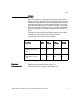
Asymmetric cryptography is often used during authentication
processes. Another significant difference between the 2 types of
cryptographic systems is the length of the keys required by the
algorithms. The keys used in symmetric algorithms are usually
much smaller than those used in asymmetric algorithms, as
described in the following table.
Related
Related Related
Related
Information
InformationInformation
Information
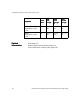
Asymmetric Cryptographic Systems (page 2-9)
Symmetric Cryptographic Systems (page 2-3)
Key Space and Brute Force Attacks (page 2-13)
Symmetric
SymmetricSymmetric
Symmetric Asymmetric
AsymmetricAsymmetric
Asymmetric
Speed Fast Slow
Key size Relatively small Extremely large
Key usage Shared secret Public/private
Usual usage Bulk data transfer Authentication
Examples DES, Triple Pass
DES, 3DES, rc4
RSA, PGP