
HP-UX SNAplus2 General Information (October 1998)








Chapter 2 43
Introducing SNAplus2
Benefits Provided by SNAplus2
Better Performance
SNAplus2 optimizes network speed by using different
traffic-management methods that balance traffic flow according to
network size.
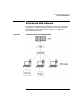
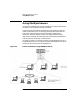
For larger networks, you can use the connection network option to
improve communication efficiency. The connection network option
creates a communications path directly between nodes. Using a
connection network enables traffic to bypass intermediate network
nodes, resulting in faster session establishment.
SNAplus2 also uses adaptive session-level pacing, automatically adjusts
congestion by regulating the rate at which LUs send message units to
partner LUs.
Scalability
SNAplus2 is fully scalable. There are virtually no hard-coded limits in
the software; it is limited only by the resources available in the HP-UX
system (such as memory, CPU speed, link bandwidth, and disk space). If
you want to monitor or limit the resource utilization of SNAplus2, refer
to HP-UX SNAplus2 Administration Command Reference.
Fiber Optic Connectivity Support
For host-based requirements, SNAplus2 supports fiber optic connectivity
through FDDI links.
Compared to conventional electrical cabling, fiber optics are broadband
media with excellent speed and signal transmission properties. Because
fiber optics carry optically encoded data, they are immune to cross-talk
and interference from electrical equipment, and hence are relatively
noise-free. As such, they are ideally suited for wide area networks where
data must be carried at high speed over long distances with minimal
attenuation or distortion. Fiber optics also provide extra security since
they cannot be easily tapped.