
HP-UX SNAplus2 General Information (October 1998)



14 Chapter 1
SNA Networking
Overview
Overview
SNAplus2 provides Systems Network Architecture (SNA) networking
support for HP-UX systems. SNA is a set of protocols devised by IBM to
facilitate communications between computers.
Over the years, SNA has evolved considerably. Initially, SNA was heavily
oriented towards accessing host computers, and relied on the host to
control the entire network. Each network or sub-network was controlled
by the host; other computers communicated directly with the host but
not with each other. This old-style SNA is called “subarea SNA,” and is
still widely used.
Today, SNA provides powerful and flexible networking capabilities,
enabling direct peer-to-peer communications between computers in the
network (without requiring the intervention of the host). In a full-fledged
peer-level network, elements in the network can communicate as
required; but no single computer is in control of the network. This
new-style SNA is called “APPN” (Advanced Peer-to-Peer Networking).
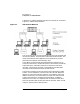
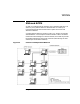
Many SNA networks have elements of both subarea and peer-to-peer
networking. As networks migrate from subarea SNA to APPN, an
APPN-capable host can control older systems while acting as a peer to
newer systems. Similarly, a single computer can access both peer
computers (in an APPN network) and a host computer (in a subarea
network). Communication with the host is controlled by the host;
communication with other computers is peer-to-peer and does not
involve the host.