
Integrate Logins with HP CIFS Server, HP-UX, and Windows 2003R2/2008



47
HP-UX Secure Shell Example (SSH)
HP-UX Secure Shell supports several authentication methods. For this example SSH will be configured
using Kerberos authentication because it integrates into the same existing Unified Login design that
has been shown for CIFS and Secure Internet Services. SSH uses the same secure authentication
protocol as our earlier examples, but provides additional security by encrypting data transfers over
the SSH tunnel. The tunneling feature of SSH has many configuration options, but the purpose of this
example is to show how to integrate SSH into the existing Kerberos Unified Login authentication
configuration from our previous examples. Therefore, only Kerberos-enablement configuration settings
are displayed.
HP-UX SSH is included by default on most HP-UX operating environments. In this example, a tunnel
will be created between our two HP-UX systems, so HP-UX Secure Shell is configured on both systems.
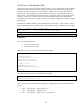
swlist -l product | grep -i secure_shell
Secure_Shell A.05.10.026 HP-UX Secure Shell
NOTE: Like the other HP-UX software products, SSH is available for free at www.software.hp.com.
Configuration
The SSH configuration files are:
/opt/ssh/etc/sshd_config
/opt/ssh/etc/ssh_config
Verify that the /opt/ssh/etc/sshd_config file has these settings:
PasswordAuthentication yes
~
# Kerberos options
KerberosAuthentication yes
KerberosOrLocalPasswd yes
KerberosTicketCleanup yes
~
# GSSAPI options
GSSAPIAuthentication yes
GSSAPICleanupCredentials yes
~
UsePAM yes
Verify that the /opt/ssh/etc/ssh_config file has these settings:
GSSAPIAuthentication yes
GSSAPIDelegateCredentials yes
Now /etc/pam.conf must be modified to enable SSH. Add the following lines to the authentication
section:
sshd auth required libpam_hpsec.so.1
sshd auth sufficient libpam_krb5.so.1
sshd auth required libpam_unix.so.1 try_first_pass