
Designing a High Performance Network File Server

12
Optimize APA Port Placement and Configuration
This customer’s application required the NFS server to deliver over 3 Gigabytes of data per second to
the client systems, and these clients were distributed across eight networks. As the server used 32
Gigabit Ethernet interfaces to deliver this data, these interfaces were configured into eight APA trunks
each containing four NICs. Originally the system was configured with each APA trunk using ports
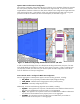
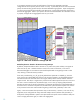
spread across the four available I/O cells on the backplane, as illustrated in Figure 4.
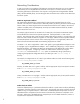
In order to take full advantage of the new nfsktcpd CPU binding enhancement, the ports of an APA
trunk should ideally be confined to a single I/O cell, as shown in Figure 5. Keep in mind that once
you physically re-cable your APA trunks, you need to update the APA configuration on the HP-UX
server to reflect the new APA port assignments.
Ensure Network Switch is Configured to Match APA Configuration
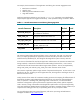
APA link aggregates on HP-UX systems support numerous trunking protocols, including:
• FEC_AUTO – Cisco proprietary Fast EtherChannel (FEC/PAgP) technology
• LACP_AUTO – IEEE 802.3ad link aggregation control protocol (LACP)
• MANUAL – Manually configured port trunks
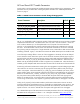
Additionally, numerous load balancing algorithms are available, including:
• LB_MAC – This algorithm uses a portion of the destination MAC address to determine how
data flows are distributed across physical ports in a link aggregate.
• LB_IP – This algorithm uses a portion of the source and destination IP address to determine
how data flows are distributed across physical ports in a link aggregate.
• LB_PORT – This algorithm uses the TCP/UDP source and destination port numbers to
distribute traffic across the ports in a link aggregate.
lan900
Fi
g
ure 4 – APA Ports Physically Distributed Across Four I/O Cells