
Understanding and Designing Serviceguard Disaster Recovery Architectures





4 Comparison of Disaster Recovery Solutions
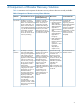
Table 6 summarizes and compares the disaster recovery solutions that are currently available:
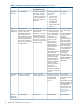
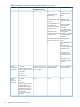
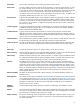
Table 6 Comparison of disaster recovery Cluster Solutions
ContinentalclustersMetroclusterExtended Distance Cluster
for RAC (HP-UX only)
Extended Distance ClusterAttributes
Increased data
protection by
Two significant benefits:Excellent in “normal”
operations, and partial
Excellent in “normal”
operations, and partial
Key Benefit
• Provides maximum
data protection.
failure. Active/active
configuration provides
failure. Since all hosts have
access to both disks, in a
supporting unlimited
distance between data
State of the data is
maximum data throughfailure where the node is centers (protects
determined before
put and reduces the needrunning and the application against such disasters
application is
for failover (since bothis up, but the disk becomes as those caused by
started. If necessary,
data centers are active,unavailable, no failover earthquakes or violent
data
the application is already
up on the second site).
occurs. The node will
access the remote disk to
continue processing.
attacks, where an
entire area can be
disrupted).
resynchronization is
performed before
application is
brought up.
• Better performance
than Extended
Distance Cluster for
resync, as
replication is done
by storage
subsystem (no
impact to host).
No automatic failover
between clusters.
Specialized storage
required. Currently, XP
SLVM configuration is
limited to two nodes for
No ability to check the
state of the data before
Key
Limitation
or P9000 withdistances of up tostarting up the application.
Continuous Access,100km*. CVM or CFS,If the volume group (vg)
EVA or P6000 withwhich are available withcan be activated, the
continuous access, HPServiceguard Storageapplication will be started.
3PAR Remote CopyManagement SuiteIf mirrors are split or PV
and EMC’s SymmetrixBundles, configurationlinks are down, as long as
with SRDF are
supported.
supports up to eight
nodes. However,
the vg can be activated,
the application will be
EMC’s Symmetrix with
SRDF is supported only
on HP-UX.
eight-node configuration
is limited to a distance of
10km*. Data
synchronization can
started. Data
resynchronization can have
a big impact on system
performance, as this is a
host-based solution.
The system performance
varies depending on the
create an impact on
system performance as
this is a host-based
solution.frequency of the data
resynchronization. In the
case of Multiple Devices,
since the data
resynchronization is done
one disk at a time, it takes
more time to resynchronize
multiple LUNs.
71