
Understanding and Designing Serviceguard Disaster Recovery Architectures
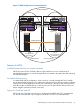
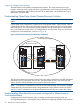

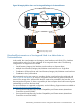
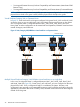

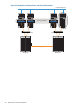


Figure 20 Integrity VM or vPars as a Serviceguard Package in Continentalclusters
Node 1
Node 2
Continentalclusters
Primary Cluster
Recovery Cluster
Recovery Group
Replication Link
XP Arrays
Node 3 Node 4
XP Arrays
Indicates that package is running.
Indicates that package is halted.
ccmonpkg
Read/Write Write Disabled
LAN/WAN
HPVM
Pri-Pkg
HPVM
Rec-Pkg
Virtualized Environments as a Serviceguard Node in a Metrocluster or
Continentalclusters
In this model, the virtual partitions or the Integrity virtual machines with HP-UX OS or VMWare
virtual machines with Linux OS are configured as Serviceguard cluster nodes. The following
configurations are supported in this model:
• Virtual Partitions/Integrity VM/VMWare virtual machines on Separate Hosts
• Multiple Virtual Partitions/Integrity VM/VMWare virtual machines on a Single Host
• Combination of Physical Hosts and Virtual Partitions/Integrity VM/VMWare virtual machines
• Combination of any of the above
HP recommends and in some cases it is mandatory for the virtual machines be configured with
NPIV (N_Port ID Virtualization) FC devices. Using NPIV ensures that only guests have exclusive
access to the storage disks. Without NPIV the disks needs to be presented to the hosts first, and
then assigned to the guests. So, there is a possibility of data corruption when both hosts and guests
inadvertently try to access the same disks.
For more information on supported configuration, see the following Support Matrices available at
www.hp.com/go/linux-serviceguard-docs.
• Serviceguard Disaster Recovery Products Compatibility and Feature Matrix (Metrocluster
Continuous Access XP P9000)
• Serviceguard Disaster Recovery Products Compatibility and Feature Matrix (Metrocluster
Continuous Access EVA P6000)
Understanding Virtualized Environments configured in Metrocluster or Continentalclusters 45