
Understanding and Designing Serviceguard Disaster Recovery Architectures


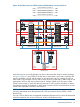


Recovery Group
The packages that have the primary-recovery relationship is called a “Recovery Group“ in
Continentalclusters. A “Recovery Group” can optionally have a rehearsal package, a data sender
package or a data receiver package in addition to the mandatory primary and recovery packages.
The rehearsal package is used for disaster recovery rehearsal operations. The data sender and
data receiver packages are used if primary application data is replicated to the recovery data
center using software replication. A maximum of 75 Recovery Groups can be configured in a
Continentalclusters configuration. The primary or the recovery package can be a failover package
or an multi-node package or a site controller package managing a complex workload.
Monitoring Package
A cluster that has a package in a recovery role needs a monitoring package. The configuration
for the monitoring package is provided with the Continentalclusters software. The monitoring
package is responsible for periodically checking the health of the cluster running the primary
package.
Cluster Events and notifications
Continentalclusters provides Cluster Events and the notification feature to ensure information from
an independent source can be gathered before the recovery process starts. The cluster events and
their notifications are user configurable.
A cluster event occurs when the monitored cluster stays in a given status for a user defined period
of time. After the occurrence of a cluster event, the set of notifications associated with that cluster
event is issued by Continentalclusters.
For example, if the primary cluster is unreachable for 10 minutes it can be considered as a Cluster
Event. If an email notification is configured, the administrator receives an email when the primary
cluster is unreachable for 10 minutes.
Notifications Methods
Notifications are user configurable and configured for each cluster event separately. The following
types of notifications are supported:
• Email messages
• SNMP traps
• TCP/UDP port message delivery
• Text log files
• OPC messages to OpenView IT/Operations
In addition, notifications are sent to the file /var/opt/resmon/log/cc/eventlog on the
cluster node where monitoring package is running.
Types of Cluster Events
Cluster events are of two types in Continentalclusters, Alerts and Alarms. At least one alarm event
must be triggered for the recovery process to start normally. If there are no cluster events, the
recovery process cannot start in Continentalclusters.
Cluster event of type alerts are typically used for informational purposes. For example, if the user
wants to be notified when the primary cluster goes down, a cluster alert event for status down can
be defined with a time duration of 0 seconds to ensure instantaneous notification if the primary
cluster goes down.
Cluster event of type alarms are typically used to indicate failures. For example, if a cluster has
remained unreachable for 10 minutes, it could mean a failure. A Cluster Alarm event must occur
to enable recovery on the recovery cluster.
However, a Cluster Alarm or Alert configured for the cluster status being UP will not enable recovery.
Understanding Continentalclusters 29