
HP Hardware Accelerated Graphics for Desktop Virtualization




Technical white paper | HP Hardware Accelerated Graphics for Desktop Virtualization
7
Hardware Virtualized GPU—True virtual GPU
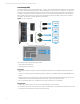
True virtual GPU is conceptually a hybrid of software virtualized GPU and pass-through GPU models. True Virtual GPU
offers the benefit of GPU sharing (software virtualized GPU model) but also gives the performance and full functionality of
a native NVIDIA graphics card and driver as it has direct access to GPU (pass-through model). Each physical GPU is shared
by multiple VM’s and also has direct access to the GPU with a configurable static vRAM size and shares the resource of the
GPU processing power. For example if I have a GPU that has 1 GB of vRAM, I can divide the vRAM to create 2 vGPUs with
512 MB vRAM, or 4 vGPUs with 256 MB vRAM etc. In the same way GRID vGPU can divide each physical GPU into up to
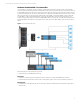
4 vGPUs per physical GPU. Figure 5 illustrates an NVIDIA GRID K2 GPU. This card has two separate GPUs embedded with a
total of 8 GB vRAM. In this example it is being divided into 4 vGPUs, each with 2 GB of vRAM, 2 vGPUs per physical GPU on
the K2.
Figure 5. Hardware Virtualized GPU model
Enterprise Hypervisors using this technology include:
• Citrix XenServer 6.2 with GRID vGPU technology
Advantages:
• Support for all 3D technologies including DirectX 9/10/11, OpenGL 4.3 via the native NVIDIA driver in the VM
• Virtual machine has full and direct access to GPU, including native graphics driver, for full workstation performance
Disadvantages:
• Potential lower overall VM density per GPU as compared to software virtualized GPU model (depends on applications
and workload)