
HP ProLiant SL4500 server series overview

Sign up for updates
hp.com/go/getupdated
Share with colleagues
Rate this document
© Copyright 2013 Hewlett-Packard Development Company, L.P. The information contained herein is subject to change without notice. The only warranties for
HP products and services are set forth in the express warranty statements accompanying such products and services. Nothing herein should be construed as
constituting an additional warranty. HP shall not be liable for technical or editorial errors or omissions contained herein.
Microsoft and Windows are U.S. registered trademarks of Microsoft Corporation.AMD is a trademark of Advanced Micro Devices, Inc. Intel and Xeon are
trademarks of Intel Corporation in the U.S. and other countries. Oracle and Java are registered trademarks of Oracle and/or its affiliates.
4AA4-5647ENW, TC1302960, April 2013
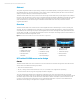
OpenStack and the one-node ProLiant SL4500
OpenStack is a Cloud operating system that controls large pools of compute, storage, and networking resources throughout
a datacenter, all managed through a dashboard that gives administrators control and allows users to provision resources
through a web interface. As free, open-source software, it enables an organization to create and offer cloud-computing
services running on standard hardware. OpenStack’s modular architecture encompasses three components; compute
(Nova), object storage (Swift), and image service (Glance). OpenStack Swift is a large-scale object storage application that
can store, retrieve, and delete flexible-sized data containers called objects. OpenStack Swift typically involves large
amounts of disk storage but requires only moderate computational power, making the HP SL4500 single-node system a
very good solution.
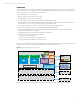
Microsoft Exchange Server and the two-node ProLiant SL4500
Microsoft Exchange mail service presents a database environment that can involve up to 100 databases of up to 16
terabytes each. Using three, 2-node ProLiant SL4500 Gen8 systems to handle 10,000 3GB mailboxes, you can achieve a
$22 per-mailbox rate with 50% less space and 35% less power than with six Dell R620 and 12 Dell MD1200 units handling
the same amount of mailboxes. For more information on using the ProLiant SL4500 system in a Microsoft Exchange
environment, refer to the white papers referenced in the “Error! Reference source not found.” section of this document.
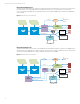
Apache Hadoop and the three-node ProLiant SL4500
Apache Hadoop is open-source software designed to run in a data-intensive, distributed parallel processing environment.
Hadoop can achieve high aggregate bandwidth when fragmented across a number of nodes in a cluster. The three-node
version of the ProLiant SL4500 server system (available 1Q 2013) with a 1:1 core-to-spindle ratio becomes a choice
solution for the Hadoop platform.
Conclusion
No longer a buzzword, Big Data is what’s happening in archival, object, and analytical environments that cannot be satisfied
economically with a siloed, JBOD infrastructure. The ProLiant SL4500 server series provides selectable processing power
and very large storage capacity within a single chassis, and can expand to meet the specific needs of large data set
applications while reducing power and complexity.
Resources, contacts, or additional links
HP ProLiant SL4500 Family Data Sheet:
hp.com/docs/servers/announcements/4AA4-3200ENW.pdf
HP ProLiant SL4540 Gen8 Quickspecs:
hp.com/products/quickspecs/14406_div/14406_div.html
HP ProLiant SL4545 G7 Quickspecs:
hp.com/products/quickspecs/14407_div/14407_div.html
White papers: Recommended Configuration for Microsoft Exchange and the HP ProLiant SL4500 system;
1-node: hp.com/V2/GetPDF.aspx/4AA4-4493ENW.pdf
2-node: hp.com/V2/GetPDF.aspx/4AA4-4490ENW.pdf
3-node:hp.com/V2/GetPDF.aspx/4AA4-4492ENW.pdf
HP ProLiant Technology papers:
hp.com/servers/technology