
Technologies for the ProLiant ML570 G4 and ProLiant DL580 G4 servers

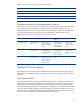


Table 1. Functionality comparison of four memory protection options
Memory Option Hot-add support Hot-replace support Memory available to OS
Advanced ECC Yes No 100%
Online Spare No No Varies
Mirroring No Yes 50%
RAID No Yes 75%
Architecture trade-offs with a large memory footprint
Three ProLiant 500 series servers—the ProLiant ML570 G4, ProLiant DL580 G4, and ProLiant DL585
G2—all have large memory footprints and high performance architectures. Because they use
fundamentally different architectures, however, there are tradeoffs that customers should understand
when evaluating the three servers. Table 2 provides information for comparing these servers.
Table 2. Memory and architecture comparison of ProLiant 500 series servers
Server Processor Architecture Maximum memory
support
Memory protection
ProLiant ML570 G4
Intel 64-bit dual-core
Xeon processor
Intel E8501 chipset;
dual 800-MHz front
side bus; DDR-2 400
memory
48 GB with single-
rank, 2-GB DIMMs;
64 GB with dual-
rank, 4-GB DIMMs
Advanced ECC;
Online Spare;
Mirroring; Hot Plug
RAID
ProLiant DL 580 G4
Intel 64-bit dual-core
Xeon processor
Intel E8501 chipset;
dual 800-MHz front
side bus; DDR-2 400
memory
32 GB with single-
rank 2-GB DIMMs;
64 GB with dual-
rank, 4-GB DIMMs
Advanced ECC;
Online Spare;
Mirroring; Hot Plug
RAID
ProLiant DL585 G2
AMD Opteron 800-
series processor
AMD 8000 chipset;
HyperTransport 800-
MHz or 1-GHz links;
DDR1 266, 333,
and 400 memory
128 GB with 4-GB
DIMMs
Advanced ECC
Updated I/O technologies
The ProLiant ML570 G4 and the ProLiant DL580 G4 have updated disk subsystems with small form
factor (SFF), serial attached SCSI (SAS) drives, and these servers include the Smart Array SAS P400
Controller.
Serial Attached SCSI
The peak data transfer rate for the current generation of SAS drives is 3 gigabits per second in full
duplex mode. In a serial system, the devices do not share a common bus, and each device can take
full advantage of the bandwidth available to it. The SAS backplane connector is compatible with
Serial ATA (SATA) drives (although it is not possible to use a SAS drive on a SATA controller), and the
chipset on a SAS controller can communicate with SATA drives. This enables administrators to store
data that needs to be available at a high-performance standard on SAS disk drives, and to use the
same enclosure to store data on slower but higher capacity SATA drives.
12