
HP F8 Architecture Technology Brief

HP F8 Architecture
6
remaining four cartridges if the data from any DIMM is incorrect or if any cartridge is
removed.
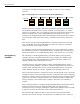
Figure 4. Data striping across one of the channels in HP Hot Plug RAID Memory
B1
C1
D1
A1
B2
C2
D2
B3
C3
D3
B4
C4
D4
B parity
C parity
D parity
Cartridge 1 Cartridge 2 Cartridge 3 Cartridge 4 Parity Cartridge
A2
A3
A4
A parity
Cache line
Because one memory cartridge is dedicated to storing parity information, the architecture
has the effective bandwidth of four memory controllers, or 8.5 GB/s (that is, 2.12 GB/s
each for four controllers). This is an astounding improvement in performance of the memory
interface compared to the 1.6-GB/s aggregate memory bandwidth of the Profusion
architecture. HP designed the F8 chipset to take advantage of the faster 400-MT/s memory
network interface and to support more memory controllers than the Profusion architecture
does.
Each memory controller supports eight DIMMs for a maximum usable memory of 32 GB
using 1-GB DIMMs. When using 2-GB DIMMs, the chipset can support up to 64 GB of
memory on the four active memory controllers.
It is important to note that HP Hot-Plug RAID Memory has no more performance overhead
than standard ECC memory. In Hot-Plug RAID Memory, the RAID engine calculates parity in
parallel to the data flow, so no additional data latency is incurred if an error is corrected.
Hot-Plug Memory
Capabilities
The redundancy in HP Hot-Plu
g
RAID Memory provides the ability to hot plu
g
memory
cartridges, delivering unprecedented levels of memory availability and scalability within
industry-standard servers. Hot-Plug RAID Memory enables replacement, addition, and
upgrade of DIMMs without shutting down the server.
Hot replace allows a system administrator to replace a failed DIMM while the system is
running. Hot replace capability is available in a driverless implementation that requires no
support from the operating system. Servers with HP Hot-Plug RAID Memory will have hot-
replace capability directly out of the box, regardless of the operating system used.
When a hot-replace operation is initiated, the memory controller tells the server to ignore the
cartridge of memory where the hot-replace operation will be performed. Until the hot-replace
operation is completed, memory transactions use the other four memory cartridges protected
by ECC. Thus, the memory subsystem operates in a nonredundant mode like today’s ECC
memory subsystems. Once the fifth memory cartridge is back online, full redundancy is
restored.
When a hot-plug operation is completed, HP Hot-Plug RAID Memory automatically rebuilds
the data across all the memory cartridges. Rebuilding data can degrade memory
performance briefly. For example, a rebuild for 4 GB of memory takes less than 30 seconds,
a small price to pay to avoid downtime while increasing fault tolerance.
After the RAID engine rebuilds the data, a verify procedure confirms that the rebuild
operation was successful. During a verify procedure, every address location in memory is