
HP ProLiant DL585 G5/G6 server technology
cache and reduces coherence traffic overload on the HT links, resulting in faster queries in both
cache- and compute-intensive applications.
AMD Dual Dynamic Power Management™
AMD Opteron processors feature AMD Dual Dynamic Power Management. This feature powers the
processor core and memory controller voltage planes independently and delivers increased
performance and improved power management.
AMD Virtualization™ technology
AMD Virtualization (AMD-V) technology is a hardware-based feature that translates virtual to physical
memory addresses using Rapid Virtualization Indexing to provide increased performance and
reduced latency.
AMD Core Select
AMD Core Select uses the BIOS to select the number of software-visible cores per processor.
Compliant operating systems and applications can recognize the reduced core count which decreases
software licensing costs. This can improve performance of applications not written to make use of the
full number of processor cores in the system by giving them access to more cache and greater
memory bandwidth per thread. The DL585 G6 server has a ROM-Based Setup Utility (RBSU) option
(Advanced->Processor Options) that allows two different configurations:
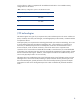
All cores enabled [default]
Enable only half of the cores [half disabled] per socket
In a multi-processor configuration the number of active cores per processor must be equal.
Processor socket technology
The latest AMD Opteron processor packages use a processor socket technology called Land Grid
Array (LGA) to support higher CPU bus speeds. The processor package designs no longer have pins.
Instead, the processor package has pads of gold-plated copper that touch processor socket pins on
the motherboard.
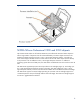
The processors must be carefully installed to prevent damaging the delicate processor socket pins.
Because pin damage could require replacing the motherboard, HP engineers developed a special
installation tool to simplify processor installation and reduce the possibility of damaging the socket
pins (Figure 3).
5