
HP ProLiant DL585 G5 server technology, 1st edition

I/O technologies
The DL585 G5 supports two types of I/O expansion slots: PCI-X and PCI Express. The server includes
two 64-bit, 100-MHz, PCI-X slots (one full length, one half length) that provide a 64-bit, 100-MHz
interface for expansion devices.
PCI Express (PCIe) is an expansion bus technology that builds upon earlier PCI technology, but it uses
a serial interface rather than the traditional parallel PCI bus. A PCIe interface
3
can support one or
more lanes, as determined by the PCIe slot. Multiple-lane connections are described as x4 for a
4-lane connection, x8 for an 8-lane connection, and so forth. Each lane is a separate serial
connection of four wires and has a bandwidth of 250 MB/s in each direction (for a total bandwidth
of 500 MB/s per single PCIe lane link). PCIe links automatically negotiate the highest number of lanes
that the slot and the card support. Therefore, a PCIe expansion card can be installed into any slot in
which it will physically fit and it will work correctly.
The DL585 G5 has seven PCIe slots: three full-length x8 slots, three full-length x4 slots, and one half-
length x4 slot. Since PCIe interface handling is split 4/3 between the two processor pairs and their
associated chipsets, optimal performance can be achieved by balancing the load of multiple PCIe
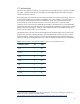
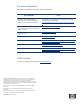
expansion cards across the HyperTransport links. Table 2 identifies the preferred order of installation.
Table 2. Preferred order for populating PCIe expansion slots in the ProLiant DL585 G5 server
Installation sequence Slot Speed
First 7 X8
Second 5 X8
Third 8 X8
Fourth 3 X4
Fifth 4 X4
Sixth 9 X4
Seventh 6 X4
3
For more information on PCIe technology, refer the white paper “HP Local I/O Technology for ProLiant and
BladeSystem Servers” available at the following URL:
http://h20000.www2.hp.com/bc/docs/support/SupportManual/c00231623/c00231623.pdf
6