
Compaq Parallel Database Cluster Model PDC/O2000 for Oracle8i and Windows 2000 Administrator Guide


2-48 Compaq Parallel Database Cluster Model PDC/O2000 for Oracle8i and Windows 2000 Administrator Guide
Compaq Confidential – Need to Know Required
Writer: John Blackburn Project: Compaq Parallel Database Cluster Model PDC/O2000 for Oracle8i and Windows 2000 Administrator Guide Comments:
Part Number: 225082-002 File Name: c-ch2 Cluster Architecture.doc Last Saved On: 6/13/01 10:21 AM
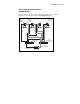
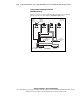
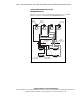
See “Active/Standby Configuration Examples for Redundant FC-ALs” in this
chapter for a detailed description of active/standby configuration examples for
a redundant FC-AL with from one to five RA4000/RA4100 Arrays. See
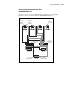
“Active/Active Configuration Examples for Redundant FC-ALs” for a detailed
description of active/active configuration examples when two to five
RA4000/RA4100 Arrays are present.
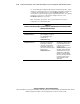
Table 2-6 identifies the features of the active/standby and active/active
configurations for redundant FC-ALs.
Table 2-6
Features of Active/Standby and Active/Active Configurations for Redundant Fibre
Channel Arbitrated Loops
I/O Path Configuration Advantage Disadvantage
Active/standby with one
RA4000/RA4100 Array
Active/standby is the only I/O
path configuration you can use
in a redundant FC-AL that
contains just one
RA4000/RA4100 Array.
Active/standby with two or more
RA4000/RA4100 Arrays
Provides true cabling symmetry
between the Storage Hubs or
FC-AL Switches and array
controllers. A Storage Hub or
FC-AL Switch connects to the
same array controller slot (top or
bottom) in every
RA4000/RA4100 Array.
Load balancing between the two
Storage Hubs or FC-AL Switches
is less than ideal because the
connection to the active array
controller in every
RA4000/RA4100 Array is routed
through the same Storage Hub
or FC-AL Switch. The second
Storage Hub or FC-AL Switch
provides no active I/O pathway
unless an active array controller
or its cable connection to the
first Storage Hub or FC-AL
Switch fails.
continued