
HP ProLiant Intel-based 100-series G6 servers


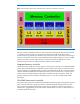
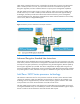
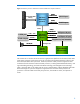

Figure 2: Block diagram of QuickPath architecture
Hyper Threading
Hyper-Threading improves performance per watt, allowing Intel-based ProLiant G6 and G7 servers to
accomplish more using the same, or less, power than servers based on previous-generation Intel
processors. Simultaneous Multi-threading Technology, or SMT, is an enhanced version of Intel’s
Hyper-Threading Technology. SMT lets each core execute two computational threads at the same
time. A single processor can execute up to eight threads simultaneously. Compared to the previous
Intel core architecture, the high-bandwidth memory subsystem supplies data faster to the two
computational processes, and the low-latency cache hierarchy allows more instructions to be
processed simultaneously.
Turbo Boost technology
Intel’s Turbo Boost technology complements SMT by increasing the performance of both multi-
threaded and single-threaded workloads. If your workloads and applications are not multi-threaded,
Turbo Boost technology can provide better performance. Turbo Boost is engaged by default and
automatically increases the clock frequency of active cores operating below power and thermal
design points determined by the processor. The maximum frequency depends on the number of active
cores and varies based on the specific configuration on a per-processor-number basis. Turbo Boost
technology is OS-independent which means that operating systems that are Advanced Configuration
and Power Interface-aware (ACPI) require no changes to support Turbo Boost technology.
Intel Xeon 5600 Series processor technology
The Intel Xeon 5600 Series processor uses the same Nehalem microarchitecture as the Xeon 5500
Series processor; it uses 32 nanometer process technology. The 5600 uses faster- and lower-power
second-generation high-k + metal gate transistors to produce high-performance processors that require
less power. It achieves up to 45% better performance per Watt over the Xeon 5500 Series processor
6