
HP ProLiant AMD-based 300-series G7 servers


12
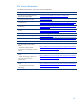
Table 2. HP power supply efficiency and Climate Savers rating
Power supply Efficiency Rating
460W AC up to 92% efficiency Climate Savers Gold
750W AC up to 92% efficiency Climate Savers Gold
1200W AC up to 94% efficiency Climate Savers Platinum
1200W 48VDC up to 90% efficiency Climate Savers Silver
Use the HP Power Advisor to help determine which power supplies will best meet your needs:
www.hp.com/go/hppoweradvisor
.
Redundant power operation
With ProL
iant G7 servers, customers can select a power supply operation mode for redundant power
systems. Through the RBSU, administrators can select “High Efficiency” mode or “Balanced” mode. In
Balanced mode, both power supplies provide power equally. This mode ensures full redundancy but
can result in higher power consumption when power supplies are operating with reduced loads and
lower power efficiency. In High Efficiency mode, the system will only use one power supply until
system load exceeds a certain threshold. The second power supply stays online maintaining
redundancy but does not supply power until needed. Either selection still provides full power
redundancy.
Voltage regulation
Voltage regulators c
onvert the 12V DC supplied from the server power supply into a variety of lower
voltages used by the different system components. HP uses voltage regulators that maintain greater
than 90% efficiency over a broad range of power requirements. The net result is near an 8% gain in
DC power efficiency, which results in almost 10% efficiency gain in AC input power. These efficiency
gains come with no loss in performance and require no configuration by the user.
Improved thermal sensors and fan control
The ProLiant AMD-based 300-series G7 servers include many more thermal sensors —referred to as a
“sea of sensors” — these sensors are located on DIMMs, hard drives, and elsewhere throughout the
server. The actual number of sensors varies by server platform.
The previous generation of ProLiant servers marked a shift away from processors as the primary
producers of heat in the server. As memory modules become denser, they generate more heat. To
combat this, DDR3 DIMMs, as used in the ProLiant G7 servers, incorporate the first reliable on-DIMM
thermal sensors
Because hard drive thermal sensors were not directly associated with fans, the fans would often
operate at high speeds to prevent hard drives from overheating. ProLiant 300-series G7 servers
incorporate hard drive temperature sensors into the body of data used to determine fan speed. This
requires collaboration among various pieces of firmware, including the iLO firmware, system
firmware, and RAID storage controller firmware. The 300-series G7 servers have “zoned” fans that
increase cooling and energy efficiencies in the server by adjusting cooling to those zones when called
for by the sensors. This provides improved efficiency and better acoustics for the platform. The iLO
management processor in the G7 300 series uses a sophisticated control algorithm to set the speed
for each fan zone in the system based on feedback from the appropriate temperature sensors. This
allows fans to consume the minimum amount of required power.
The fan control algorithm lets ProLiant 300-series G7 servers change fan speed as the situation
dictates. In ProLiant AMD-based servers prior to G7, if one fan failed, all the other fans were set to
high speed to assure the server remained within thermal specifications. ProLiant 300-series G7 servers