
HP ProLiant 300-series AMD-based G6 server technology
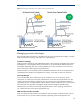



recognize the reduced core count so that fewer software licenses may be required. By reducing core
count recognition, Core Select has the potential to reduce software licensing costs. Also, applications
can benefit from increased memory bandwidth and cache per core. This feature is offered on HP
ProLiant G6 platforms that are configured with an AMD 2400 or 8400 series processors and the
latest System ROM supporting this feature.
For HP ProLiant G5 platforms using earlier models of the AMD processor (2300/8300 series), the
RBSU offers a similar core disable option based on HP Core Disable technology. With the HP Core
Disable option, the user is able to configure the server such that all cores are enabled or half the
cores are enabled per processor socket.
Security
The Trusted Platform Module™ (TPM) and Microsoft® BitLocker® technology are supported in all
ProLiant 300-series G6 servers by means of the Trusted Platform Module option kit.
Trusted Platform Module
The Trusted Platform Module v1.2, supported on ProLiant G6 servers, is a microcontroller chip that
can create, securely store, and manage artifacts such as passwords, certificates, and encryption keys
that are used to authenticate the server platform. The TPM 1.2 chip provides a unique Endorsement
Key (EK) and a unique Storage Root Key (SRK). It provides data encryption and uses RSA, SHA-1,
RNG cryptographic functions to provide access protection, OS level protection, and stolen disk
protection.
The TPM 1.2 chip can also store platform measurements to help ensure that the platform remains
trustworthy. TPM enables Microsoft BitLocker, part of Windows Server 2008.
For more information about TPM, go to http://www.hp.com/go/TPM
BitLocker Drive Encryption
Microsoft BitLocker Drive Encryption (BitLocker) is a data protection feature available in Windows
Server 2008. BitLocker uses the enhanced security capabilities of TPM version 1.2 to protect data and
ensure that a server running Windows Server 2008 has not been compromised while the system was
offline.
Implementing BitLocker requires the following:
• The Master Boot Record (MBR), a small, encrypted system partition of approximately 50 MB to
contain boot utilities
• TPM version 1.2
• Trusted Computing Group (TCG) compliant firmware including support of “Static Root of Trust”
• Two NTFS partitions on the boot drive
During the boot process, the TPM will not release the encryption key until completing a comparison of
OS configuration information, or hash, with an earlier snapshot of the same data. If any part of the
hash is compromised (for example by introduction of malicious code), the TPM ensures that the
volume encryption key is never released.
Systems management and monitoring
HP offers management tools to program and control all aspects of the dynamic server environment.
HP ProLiant Onboard Administrator powered by the iLO 2 management processor provides remote
management with other core-embedded management functions to simplify setup, health monitoring,
15