
Ultra-Dense Server Deployment in Racks

Compaq Ultra-Dense Server Deployment in Compaq Racks 12
128H-0400A-WWEN
2 Power, Thermal, and Weight Information
After the type and the number of servers have been determined, the next most important parameters in
deployment planning are on power, thermal and weight. This section enables customers to calculate the
necessary power, thermal and weight for the rack configurations unique to their environment.
Effective planning begins with recognizing environmental and server basics such as the power dedicated
to each rack and how much power each server draws. After understanding these requirements, the
electrical power lines can be planned.
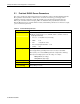
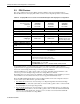
Section 2.1 lists individual weight, power rating and thermal dissipation specific to the ProLiant DL360
server itself. The power consumption of the servers has direct relationship with the thermal dissipation,
which will determine the cooling system requirements as well as how the ventilation system should be
constructed around the racks.
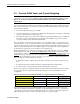
Section 2.2 provides more tools to render input power budgets, and to derive input current and thermal
dissipation from the input power.
Following this, Section 2.3 outlines Compaq PDU choices best suited for building rack configurations.
This section describes technical specifications for two high voltage PDUs and one low voltage PDU. It
also distinguishes the outlet plug connector types and internal circuit breakers associated with each PDU.
Section 2.4 bridges the server power ratings and the PDU power rating with a quick analysis and
guideline, for allocating the correct number and type of PDU for a particular rack deployment.
Lastly, Section 2.5 explores important requirements for weight capacity planning by summarizing the
weights of individual rack components and providing an example of how a typically configured rack of 42
ProLiant DL360 servers can easily weigh as much as 1,700 lb without the cables. Understanding the
weight of a fully populated rack will enable the server deployment planning, such as where to build the
servers and where to populate the racks. In addition, the floor support requirements can be derived from
the weight information of all the servers and other equipment installed in the racks.
Note: This Section 2 can be read selectively. Section 2.2.2 (Measured Input Power) and Section 2.2.3
(Input Power Budget De-rating) may be skipped, if full input power ratings will be used for the power and
thermal calculations, however these sections are highly recommended for customers to gain insight into
the configurations listed in Section 3 or planning a custom configuration. The remainder of Section 2
should be understood for proper deployment planning and installation.
Refer to the Compaq ProLiant DL360 QuickSpecs for detailed specifications on the ProLiant DL360
server and options.
The following notation for the optional components will be used throughout this section:
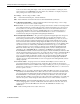
(1) 1x, 2x, 4x : number of components, for example, 1x128MB means one 128MB DIMM
(2) 550MHz : Intel Pentium III 550-MHz Processor
(3) 800MHz : Intel Pentium III 800-MHz Processor
(4) 128MB : 128MB DIMM
(5) 256MB : 256MB DIMM
(6) 512MB : 512MB DIMM
(7) 1GB : 1GB DIMM
(8) HDD : Hard Disk Drive
(9) 9.2GB : 9.2GB 10,000rpm Wide Ultra2 SCSI HDD
(10) 18.4GB : 18.4GB 10,000rpm Wide Ultra2 SCSI HDD
(11) SA4200 : Smart Array 4200 Controller option (64-bit PCI card)
(12) Remote Insight Lights-Out Edition : Remote Insight Lights-Out Edition option (32-bit PCI card)