
ProLiant Server High-Density Deployment Server Solution

Glossary
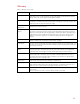
Table 11. Glossary of Power Terms
Term Description
High Voltage 180 - 264 VAC (200-240 VAC nominal) supplied to areas where load requirements are such that
high voltage is more economical. Common in commercial applications in North America, numerous
foreign countries also use this range as the AC appliance standard.
Inrush Current A high, momentary current draw occurring when power is first applied to electrical systems. This
current drain is not relative to the power-on requirements of equipment. It is due to the capacitive and
inductive properties of components in the power supply.
Keyboard/
Video/Mouse
Keyboard/video/mouse (KVM) peripherals. A KVM switch is an accessory that switches a single KVM
set between two or more server units.
Ground Leakage
Current
Residual current flow through the grounding conductor, which is always undesirable. With data
processing occurring at ever-increasing speeds, most IT equipment these days includes capacitors in
the power circuits to filter radio frequency (RF) signals to ground. While effective at filtering RF, these
components tend to allow a small amount of AC current to pass to the ground. Leakage current is
additive, so that as more equipment is connected to the AC mains, the amount of leakage can
increase.
Low Voltage 90 - 132 VAC (100-120 VAC nominal) supplied at utility outlets in homes and offices. This is the AC
appliance standard used in North America, Latin America, and Japan.
Power Density The amount (product) of amperage and voltage provided to a system (VA). A 120-VAC 30-amp circuit
will deliver a power density of 3600 VA while a 208-VAC 30-amp circuit (single-phase) will deliver a
power density of 6240 VA.
Power Distribution Unit
(PDU)
Rack-mounted component that connects directly to the AC power infrastructure of the building. The
PDU typically provides circuit-breaker protection for groups of AC outlets into which separate AC
components of the rack are plugged. Some PDU designs offer primary/secondary switching.
Power Factor (Pf) An efficiency rating that indicates the amount of watts actually consumed by a load from the volt-
amperes delivered to it. The rating is expressed as either a decimal number between 0 and 1, or
percentage of the formula of dividing watts by volt-amperes. A power factor of 1 indicates that a
device receiving 1 VA is consuming 1 watt.
Power Service Point at where electrical power enters a building or equipment room.
Volt-Ampere (VA) A unit of apparent power (i.e., the amount of AC power that is available to or can be handled by
utility equipment) measured with a volt meter and an ammeter. In single-phase systems, VA = E × I,
where E = volts, I = current in amperes. In three-phase systems, VA = 1.73 × E × I.
Watt (W) A unit of true power consumed by the product and measured with an input power meter. In single-
phase systems,
W = E x I x pf, where E = volts, I = current in amperes, and pf = power factor.
32