
HP ProLiant Intel-based 100-series G6 servers


9
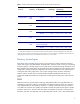
Table 1. Processor technologies supported on the ML110 G6 and DL120 G6 servers
Max Turbo Boost frequency
increment (n)*
Active cores
Intel Xeon
Processor
CPU
Frequency
Supported ML and
DL G6 platforms
Intel HT
Technology
4 3 2 1
ML110 No n=1 n=1 n=2 n=3 Processor 3430 2.40
GHz
DL120 No n=1 n=1 n=2 n=3
ML110 Yes n=1 n=1 n=2 n=3 Processor 3440 2.53
GHz
DL120 Yes n=1 n=1 n=2 n=3
ML110 Yes n=1 n=1 n=4 n=4 Processor 3450 2.66
GHz
DL120 Yes n=1 n=1 n=4 n=4
ML110 Yes n=1 n=1 n=4 n=5 Processor 3460 2.80
GHz
DL120 Yes n=1 n=1 n=4 n=5
ML110
(3470 not supported)
NA NA NA NA NA Processor 3470 2.93
GHz
DL120 Yes n=1 n=1 n=4 n=5
*“n” indicates the multiplier used to calculate the maximum potential frequency increment supported by Intel Turbo Boost
technology for each processor model and given number of active cores. This number (n) is multiplied by bus clock frequency
(BCLK) to get the actual frequency. The standard bus clock frequency is 133.33 MHz.
Memory technologies
Xeon 3400, 5500, and 5600 Series processors connect directly to memory rather than through a
chipset. They support only DDR3 DIMMs. HP designed the 100-series servers so that you can manage
all memory options, including memory mirroring and memory channel interleaving, through the server
BIOS and BIOS Setup Utility (BSU). HP designed specific BIOS and BSU functions to manage memory
configurations, letting you optimize configurations for maximum performance while reducing power
consumption and cooling requirements. You can also manage memory protection and latency
reduction options. Because of the increased reliability of DDR3 on-DIMM thermal sensors, HP
incorporates DIMM thermal data into the algorithms controlling thermal and power states within the
server.
DDR3
DDR3 has several key enhancements including an 8-bit prefetch buffer for storing data before it is
requested. By comparison, DDR-2 has a 4-bit buffer. For DDR3, the data signal rate can increase to
1333 Megatransfers per second (MT/s). While this is commonly referred to as having a speed of
1333 MHz, the maximum clock speed for the DIMMs is actually 667 MHz and the signal is double-
pumped to achieve the 1333 MT/s data rate. DDR3-1333 DIMMs can operate at clock speeds of
667 MHz, 533 MHz, and 400 MHz with corresponding data rates of 1333, 1066, and 800 MT/s.