
HP ProLiant DL2000 server technologies

2
Introduction
The HP ProLiant DL2000 is part of the ProLiant DL Multi Node Servers line. The DL2000 extends the
benefits of the DL1000 with individual node serviceability. We designed the DL2000 to optimize
data center space, increase performance while lowering energy consumption, and provide flexible
configurations that fit into existing industry-standard racks. This flexible design lets you configure the
DL2000 for different application requirements, from more I/O, to more storage, to more compute
power. You can optimize the DL2000 for a wide range of environments, from SMB to the scale-out
applications.
HP ProLiant DL2000 Multi Node Server
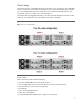
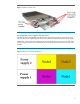
The DL2000 chassis can house up to four server nodes in a 2U space. It is mechanically unique in its
chassis design, server node configuration, thermal management, and power supply utilization. The
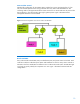
DL2000 uses the same certified components and management tools as the ProLiant 100 server series,
but it achieves greater efficiency by sharing fan power and using central power supplies.
The DL2000 provides the following benefits over traditional rack-mounted servers:
Improved efficiency. Industry-leading efficiency helps you meet power and cooling restraints and
green IT mandates. Use of busbars and more efficient power supplies lets you power the system
with less energy.
Easy serviceability. Hot-pluggable nodes make servicing easy with no disruption to other nodes
sharing the chassis. You can insert and remove each node individually without affecting the other
nodes in the chassis.
Flexibility. Larger drive cages, 1U and 2U hot-pluggable nodes, and an unmatched choice of
power supplies let you optimize the system for your applications.
Greater density. Up to 4 servers, 8 processors, 24 drives, and 64 DIMMs in a 2U space. The
DL2000 has the highest DIMM density for dual-socket servers in the industry.
The DL2000 incorporates advanced technologies in every subsystem (processors, memory, thermals,
power, I/O, and storage) for speed, efficiency, and manageability. Examples of these technologies
include:
- The servers support Intel processors and up to 1333 MHz DDR3 memory modules.
- DIMM sensors provide thermal data the DL2000 uses to adjust fan speed for thermal power
and efficiency, helping to reduce power-related operating costs.
- Serial PCIe 2.0-capable Smart Array controllers use Serial Attached SCSI (SAS) technology to
increase data flow and improve the ability to locate and correct data errors.
- A flash-backed write-cache system uses flash devices to retain cache data and super-capacitors
instead of batteries to provide power during a power loss.
- BIOS enhancements let you manage memory and regulate power for maximum performance.
The DL2000 supports more operating systems than any other multi-node server in the industry,
including Windows, Linux®, Solaris, VMware ESX, and Citrix XenServer.
See
www.hp.com/servers/proliantdl2000
and www.hp.com/servers/proliantdl170e for complete
ProLiant Multi Node server specifications.