HP ProLiant DL170e G6 Server Software Configuration Guide Part number 612342-001 First Edition October 2010
Legal notices © Copyright 2010 Hewlett-Packard Development Company, L.P. The information contained herein is subject to change without notice. The only warranties for HP products and services are set forth in the express warranty statements accompanying such products and services. Nothing herein should be construed as constituting an additional warranty. HP shall not be liable for technical or editorial errors or omissions contained herein. Microsoft, Windows, and Windows NT are U.S.
Contents System BIOS configuration .................................................................................................................... 4 System BIOS overview ................................................................................................................................. 4 BIOS software ............................................................................................................................................ 4 BIOS Setup Utility .............................
System BIOS configuration This chapter describes the basic functions of the System BIOS. System BIOS overview A Basic Input/Output System, or BIOS, is a set of programs permanently stored in an EEPROM chip (U21) located on the system board. These programs serve as an interface between the server’s hardware components and its operating system. This ProLiant server features a ROM BIOS-based diagnostic tool that monitors system activity and performs constant hardware testing to ensure proper system operation.
NOTE: If you repeatedly receive “Run Setup” messages, the battery located on the system board (XBAT1) may be defective. In this case, the system cannot retain configuration values in CMOS. Ask a qualified technician for assistance. The Setup Utility loads the configuration values in a battery-backed nonvolatile memory called CMOS RAM. This memory area is not part of the system RAM, which allows configuration data to be retained when power is turned off. The values take effect when the system is booted.
Table 1 Setup Utility navigation keys Key Function ← and → Move between selections on the menu bar. ↑ and ↓ Move the cursor to the field you want. The currently selected field is highlighted. The right side of each menu screen displays the Item Specific Help panel. This panel displays the help text for the selected field. It updates as you move the cursor to each field. <+>, <–> Select a value for the currently selected field if it is user-configurable.
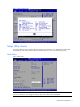
Figure 2 General Help Screen Setup Utility menus The Setup Utility menu bar displays the five primary menu selections. For detailed information and screenshots of these Setup menus and their related submenus, refer to the following sections. Main Menu Figure 3 Main Menu NOTE: The time is in 24-hour format. For example, 5:30 A.M. appears as 05:30:00, and 5:30, P.M. as 17:30:00. If you unplug the battery, setup time values will be 00:00:00.
Table 2 Main menu fields Field Description System Overview Displays the product name, system ROM Version, system ROM date and identification number. Processor Displays the CPU version, speed and count. System Memory Displays the amount of system memory detected during POST. System Serial Number Displays the server serial number. The serial number is indicated on the serial number label pull tab on the front panel. Asset Tag Enter the server asset tag. System Time Adjusts the system time.
Table 3 Boot Settings Configuration submenu fields Field NUMLOCK Description Options Do not display any splash screen during POST. For HP OEM business. Disabled Set this value to allow the Number Lock on the keyboard to be enabled automatically when the computer system is boot up. This allows the immediate use of 10-keys numeric keypad located on the right side of the keyboard. To confirm this, the Number Lock LED light on the keyboard Will be lit. This is the default setting.
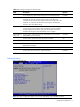
Table 4 Advanced menu fields Field Description CPU Configuration You can use this screen to select options for the CPU Configuration Settings. Use the up and down keys to select an item. Use the and keys to change the value of the selected option. A description of the selected item appears on the right side of the screen. The settings are described on the following pages. IDE Configuration You can use this screen to select options for the IDE Configuration Settings.
CPU Configuration submenu Figure 6 CPU Configuration submenu NOTE: Data Reuse option is for Intel®Xeon® 5600 Series Processors only. It will not display when Intel® Xeon® 5500 Series Processors are installed. Table 5 CPU Configuration submenu fields Field Description Options Data Reuse Data transfers between cache levels are optimized. Set according to observed system. This is the default value. Enabled Data transfers between cache levels are not optimized.
Table 5 CPU Configuration submenu fields Field Description Options Advanced Memory Protection Provides the greatest memory capacity for a given DIMM size, while providing up to 4-bit error correction. This mode is the default option for this server. Always enabled for all modes. Advanced ECC Only Provides maximum protection against failed DIMMs. Uncorrectable errors in Mirrored one channel are corrected by the mirror channel.
IDE Configuration submenu Figure 7 IDE Configuration submenu Table 6 IDE Configuration submenu fields Field Description Options SATA Controller Mode Legacy Native mode, supports up to 4 drivers. Compatible Only available on systems with an embedded software RAID option ROM. RAID This is the DEFAULT if NCQ Mode requires that AHCI also be Enabled. Otherwise, legacy SATA Native Mode is the DEFAULT as previously specified. This is the default setting.
Table 6 IDE Configuration submenu fields Field Description Embedded SATA Link Rate System BIOS automatically sets the highest possible link rate based on the AUTO chipset and drives installed. It’s the default value. IDE Detect Time Out(Sec) Options System BIOS sets 3Gb/s Max link rate based on the chipset and drives installed. 3Gb/s Max System BIOS sets 1.5Gb/s Max link rate based on the chipset and drives installed. 1.
IO Device Configuration submenu Figure 8 IO Device Configuration submenu Table 7 IO Device Configuration submenu fields Field Description Options Embedded Serial Port Set this value to prevent the serial port from accessing any system resources. When this option is set to Disabled, the serial port physically becomes unavailable. Disabled Set this value to allow the serial port to use 3F8 as its I/O port 3F8/IRQ4 address and IRQ 4 for the interrupt address. This is the default setting.
ACPI Configuration submenu Figure 9 ACPI Configuration submenu (1) Table 8 ACPI Settings submenu fields Field Description Chipset ACPI Configuration This option specifies High Precision Event Timer.
Table 9 South Bridge ACPI Configuration submenu fields Field Description Options High Precision Event Enable High Precision Event Timer. This is the default setting. Timer Disable High Precision Event Timer. Enabled Disabled IPMI Configuration submenu Figure 11 IPMI Configuration submenu Table 10 IPMI Configuration submenu fields Field Description SEL Configuration Select SEL Configuration in the left frame of the screen to go to the submenu for that item.
Table 10 IPMI Configuration submenu fields Field Description Hardware Health Information Select Hardware Health Information in the left frame of the screen and press to go to the submenu for that item. That will display CPU temperature, ambient temperature, CPU fan speed, system fan speed, chassis fan speed. These items cannot be changed by the user. It accords with the sense of the case. If there is LV CPU and no card in slot1, then System Fan 6 Rotor 1 and System Fan 6 Rotor 2 no display.
Field Description View BMC System Event Log The option specifies BMC system event log. Select this option and press to access the submenu to view the contents of System Event log. Clear BMC System Event Log The option specifies clear system event log. If the BMC Event log is full, you can choose this item to clear out the BMC Event log. If this option is selected, a confirmation prompt will appear before the log is cleared.
Figure 15 LAN Configuration submenu (1) Figure 16 LAN Configuration submenu (2) NOTE: For “BMC NIC Allocation”: If the IPMI card is not installed, the options are “Shared” and “Disabled”, the default value is Shared. If the IPMI card is installed, the options are “Disabled” and “Shared”, the default value is Disabled. Table 13 LAN Configuration submenu fields Field Description Options BMC NIC Allocation Set the value allow support share NIC mode.
Table 13 LAN Configuration submenu fields Field Description Options Set the value prevent support from BMC NIC allocation. Dedicated BMC LAN Configuration The option specifies DHCP (Dynamic Host Configuration Protocol) IP source. The optimal setting is Static. The setup default is DHCP. Static Current IP Address Set this value needs you manual to set the IP source. DHCP Set this value allows dynamic get the IP source.
Table 14 Watchdog Dog Timer Reset submenu fields Field IPMI Watchdog Timeout Description Options Disabled the item will not allow to crashes or hangs if OS crashes or hangs. Disabled Set this value to allow BMC to power down if the operating system crashes or hangs. Power Down Set this value to allow BMC to power cycle if the operating system crashes or hangs. Power Cycle Sets a 5 minute timeout value for BMC to wait before assuming the system has crashed and needs to reset.
Figure 18 Hardware Health Information submenu Table 15 Hardware Health Information submenu fields Field Description System CPUs Health Information Display system CPUs health information. Ambient Sensors Health Information Display Ambient Sensors Health Information. DIMM Temperature Sensors Health Information Display DIMM Temperature Sensors Health Information. System Voltage Health Information Display System Voltage Health Information.
USB Configuration submenu Figure 19 USB Configuration submenu Figure 20 USB Ports NOTE: When you install USB storage, USB Mass Device Configuration items are displayed. From this item, you can get some information about the device, some information you can configure it if needed.
Table 16 USB Configuration submenu fields Field Description Options USB BIOS Support This setting allows the use of the USB function. This is the default setting. Enabled This setting makes the onboard USB function unavailable. Disabled Set this value to support the EHCI-off. The setting default value is Enabled. Enabled Set this value to not allow support the EHCI-off. Disabled Set this value to enable USB ports. It is the default value. Enabled Turn off external and internal USB ports.
Figure 22 Remote Access Configuration submenu (2) Table 18 Configure Remote Access Configuration submenu fields Field Serial Port Mode Description Options Set this value to allow you to select 115200 as the baud rate (transmitted bits per second) of the serial port. 1152008,n ,1 Set this value to allow you to select 57600 as the baud rate (transmitted bits per second) of the serial port.
PCI BUS Configuration submenu Figure 23 PCI BUS Configuration submenu Table 19 PCI BUS Configuration submenu fields Field Description Options Embedded VGA Control Embedded VGA Stays ON as Primary Video Controller, regardless of other graphics controllers being present. Always Enabled Disable embedded VGA if add-in graphics controller detected. This is the Default value.
Power Configuration submenu Figure 24 Power Configuration submenu (1) Figure 25 Power Configuration submenu (2) Figure 26 Power Configuration submenu (3) System BIOS configuration 28
Table 20 Power Configuration submenu fields Filed Description Options Power Efficiency Mode BIOS will initialize all power related processor and chipset settings to maximize the performance per Watt. This is the default value. Efficiency BIOS will initialize all power related processor and chipset settings to maximize the performance of the server. Performance The user has modified the configuration of power/performance related settings individually. Custom Detect the current memory speed.
Table 20 Power Configuration submenu fields Filed Description Options ASPM Mode This option would be chosen by the user if there were compatibility issues with their PCIE option cards. This is the default setting. Disabled Allows the PCIE ports to enter L0s and/or L1 states. Enabled Enable or disable the “Enabled Halt State” disallowed. when power efficiency mode is performance, value is disabled. This is the default setting.
Table 20 Power Configuration submenu fields Filed Description Options Turbo Mode Prevent processor cores to run faster than marked frequency in specific condition. When power efficiency mode is efficiency, the value is disabled. This is the default setting. Disabled Allows processor cores to run faster than marked frequency in specific Enabled condition. When performance mode is performance, the value is enabled. NOTE: Turbo Mode is currently only available on certain high-bin Intel processors.
Table 21 Boot menu fields Filed Description Options Embedded NIC Port 2 PXE Set this value not to allow boot form network. Disabled Set this value to allow boot from network. Enabled Set this value not to allow boot from network. Disabled Set this value to allow boot from network. Enabled Embedded NIC Port 1 Control Boot Device Priority Submenu To change the boot order, select a boot category type such as Hard disk drives, Removable media or ATAPI CD ROM devices from the boot menu.
Hard Disk Drives Submenu Figure 29 Hard Disk Drive submenu Security menu The Security menu allows users to set an administrator password. When entered, this password allows the user to access and change all settings in the Setup Utility. Figure 30 Security menu To set an administrator password: 1. Indicates whether a supervisor password has been set, if the password has been installed, installed displays, if not, not installed displays. 2.
The Enter New Password window displays. Figure 31 Enter New Password 3. Type a new password in the Enter New Password box. The password may consist of up to six alphanumeric characters (A-Z, a-z, 0-9), then press Enter. The Confirm New Password window displays. Figure 32 Confirm New Password 4. Type the same password in the Confirm New Password box to verify the first entry, and then press Enter. The Password Installed OK is displayed. Press OK to finish.
Figure 33 Password installed 5. Press F10 to save the password and close the Setup Utility. Setup automatically changes the administrator Password. To change the Admin Password: 1. In the Security menu screen, in the Change Admin Password field, press Enter. The Enter New Password displays. Type a new password in the Enter New Password box. Type the same password in the Confirm New Password box to verify the first entry, then press Enter. The Password Installed OK is displayed. Press Enter to finish.
Figure 34 Password Check submenu Table 22 Password Check submenu fields Option Description Setup Set this value need to check password while invoking the set up utility. Always Set this value must check password while invoking setup on each boot. Exit menu The Exit menu displays several options on how to quit the Setup Utility. Select any of the exit options then press Enter.
Figure 35 Exit menu Table 23 Exit menu fields Option Description Save Changes and Exit Save the changes made and exit the Setup Utility. Discard Changes and Exit Discard the changes and exit the setup utility. Discard Changes Discard the changes in the utility. Load Optimal Defaults Loads the default settings for all BIOS setup fields.
ensure that the server is properly functioning. This diagnostic function automatically runs each time the server is powered on. These diagnostics, which reside in the BIOS ROM, isolate server-related logic failures and indicate the board or component that needs to be replaced, as indicated by the error messages. Most server hardware failures are accurately isolated during POST. The number of tests displayed depends on the configuration of the server.
Table 24 POST Error Messages Error code Error message Description/corrective action 048h Password check failed Password is incorrect after retried a few times. Users might need to reset the password. 04Ch Keyboard/Interface Error Keyboard controller failed test. This may indicate a problem with system hardware. 05Dh S.M.A.R.T. Status BAD, Backup and Replace Hard Disk S.M.A.R.
Table 24 POST Error Messages Error code Error message Description/corrective action 609h Temperature Violation Detected! Waiting 5 minutes for system to cool. Press ESC Key to resume booting without waiting for the system to cool. If system detects one or more temperature sensor over heat, this Warning: Pressing message will appear. ESC is NOT recommended as system may shutdown unexpectedly.
OS installation Supported OSes Microsoft Windows Server Microsoft Windows Server 2008 Hyper V Red Hat Enterprise Linux (RHEL) SUSE Linux Enterprise Server (SLES) Solaris 10 for x86/x84 based Systems Citrix Essentials for XenServer (Retail) Microsoft Windows 2003 Server, Standard Edition (x32 and x64) - SP2 and R2 Microsoft Windows 2003 Server, Web Edition Microsoft Windows Server 2003 R2 for Embedded Systems Microsoft Windows Server 2008, Standard Edition (x86 and x64) - base and R2 Microsoft Windows Server
It is recommended that you do not install any third party adapter until you verify that the HP equipment is functioning properly and you complete the OS installation. Your ProLiant server comes with new hard disk drive(s) that do not need specific setup. However, if you install additional used hard disk drives in your new server: • Note that most OS installations remove all data from the hard disk on which they are installed.
Server management Pre- and post-installation procedures Pre-installation procedures WARNING: Failure to properly turn off the server before you open the server or before you start removing or installing hardware components may cause serious damage as well as bodily harm. WARNING: To reduce the risk of personal injury from hot surfaces, allow the chassis and any installed hardware components to cool before touching them.
To configure the BMC through the Setup Utility: 1. In the Serial Port Configuration submenu under the IPMI Configuration submenu, set the Serial port Assignment field to System or BMC. See the “Serial Port Configuration submenu fields” section for more information. 2. In the LAN Configuration Settings submenu under the IPMI configuration submenu, set the IP address, default gateway, and IP subnet mask for the BMC. You can set the addresses manually or use DHCP to set the addresses automatically.
To enable console redirection via the Setup Utility: 1. In the Serial Port Configuration submenu under the IPMI Configuration submenu, set the Serial port Assignment field to System or BMC. See the “Serial Port Configuration submenu fields” section for more information. 2. In the Console Redirection submenu, set Remote Access to Enable. See the “Console Redirection submenu fields” section for more information. 3. Press F10 to Save and Exit.
Index A I administrator password, 33 IDE, 15 administrator password changing, 35 IDE Configuration submenu, 13 administrator password checking, 35 IO Device Configuration submenu, 15 Advanced menu, 9 IP subnet mask, 44 asset tag, 8 IPMI Configuration submenu, 17 ATA/IDE Configuration, 13 IPMI LAN interface, 44 B L Baseboard management controller, 19 LAN Configuration, 17 Basic Input/Output System, 4 LAN Controller, 44 BIOS EHCI Hand-Off, 25 Load Option Default, 37 BIOS overview, 4 loa
Serial Port Switching, 19 U Setup Utility menus, 7 USB Configuration submenu, 24 software, 4 USB Controller, 25 Supported operating systems, 41 V system configuration changing, 4 System Date, 8 system defaults, 37 System Time, 8 View BMC System Event Log, 19 W Watch Dog Timer Reset, 17 system time and date setting, 4 Index 47