
HP ProLiant AMD-based 100-series G7 servers

superior memory and I/O capability, near native virtualization performance, and a range of power
bands
1
that place a priority on low power consumption.
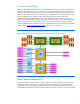
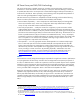
Figure 2. Block diagram of Direct Connect 2.0 architecture in the AMD 6100 series processors
AMD Opteron 6100-series
processor
HT3 L2
x16
x16
x16
x16
HT3 L1 HT3 L3 HT3 L0
8 or 12 Cores
DDR3
72 Bit
72 Bit
72 Bit
72 Bit
512 KB shared cache per core
12 MB L2 cache
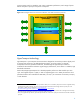
HyperTransport technology
HyperTransport is a point-to-point interconnect that is designed to connect the processors directly and
to connect each processor to its dedicated memory banks, as well as to other I/O chipsets.
2
Compared to a shared, parallel front-side bus, the advantages of HyperTransport include no
overhead for bus arbitration and easier signal integrity maintenance, which results in a scalable, high-
bandwidth architecture.
Each16-bit (2-byte) HyperTransport link is double-pumped to perform two data transfers per clock
cycle. From HyperTransport 1.0 (HT1) in 2001 to HyperTransport 3.0 in 2008, the maximum clock
speed and transfer rate increased from 800 MHz (1.6 MT/s
3
) to a maximum of 2.6 GHz (5.2 GT/s)
in each direction.
1
Power bands refer to a new metric developed by AMD to reflect power consumed by the processor and its integrated memory
controller during peak workloads. This metric is based on AMD’s measurement of Average CPU Power (ACP). For more
information on ACP, see the whitepaper at www.amd.com/us-
en/assets/content_type/white_papers_and_tech_docs/43761C_ACP_WP.pdf
2
HyperTransport Technology was invented at AMD with contributions from industry partners and is managed and licensed by
the HyperTransport Technology Consortium, a Texas non-profit corporation.
3
MT/s, or megatransfers per second, equals the speed of the link in millions of cycles per second times the number of transfers
per cycle.
4