
ProLiant DL140 Generation 2 Server Maintenance and Service Guide

Diagnostic tools 41
Diagnostic tools
Diagnostic tools overview
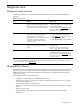
The following utilities assist in diagnosing problems, testing hardware, and monitoring and managing server
operations.
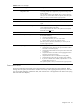
Table 2 Diagnostic tools
Tool What it is How to run it
User Diagnostics A tool to assist testing and/or verifying
operation of hardware. If problems are found,
the diagnostics package isolates failures down
to the replaceable part, whenever possible.
Diagnostics and utilities must be accessed when
a system configuration error is detected during
Power-On Self-Test (POST).
Check the HP website at www.hp.com
for the
most recent version of the HP ProLiant DL140
Generation 2 User Diagnostics.
IPMI Event Log The IPMI Event Log is a log that is generated by
the management controller (U45) when it
detects significant or critical system
management events. This includes messages for
events such as ‘temperature threshold
exceeded’, ‘voltage threshold exceeded’,
‘power fault’, etc.
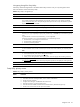
To view the IPMI event log:
1 Access the PhoenixBIOS Setup Utility.
2 In the Advanced menu screen, select the
IPMI field, then press Enter.
3 Select System Event Log, then press Enter.
PhoenixBIOS Setup Utility A hardware configuration program used to
manage memory, processor, and system
settings.
Run BIOS Setup directly by pressing the F10
key during POST.
Refer to the “Accessing the Setup Utility”
section on page 42 for more information.
HP ROMPaq Utility A utility that upgrades the current system ROM. Run this utility from the HP ROMPaq Utility
bootable floppy after powering up the server.
Check the HP website at www.hp.com
for the
most recent version of the HP ProLiant DL140
Generation 2 ROM.
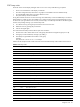
Note: For more information about the diagnostic tools described in this table, and other tools available for your server, refer
to the Servers Troubleshooting Guide located inside the HP ProLiant DL140 Generation 2 Server Support CD. For the most
recent version of this guide, go to www.hp.com
.
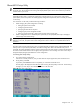
PhoenixBIOS software
PhoenixBIOS software is a ROM BIOS-based diagnostic tool that monitors system activity and performs constant
hardware testing to ensure proper system operation. ROM BIOS is a set of programs permanently stored in an
EEPROM chipset (U54) located on the system board. These programs micro-manage the hardware devices
installed on your server.
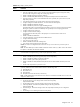
The PhoenixBIOS software serves three functions:
• Configure the system settings via the PhoenixBIOS Setup Utility
Using the Setup program, you can install, configure, and optimize the hardware devices on your system
(clock, memory, disk drives, etc.).
• Initialize hardware at boot via POST routines
At power-on or reset, the software performs POST routines to test system resources and load the operating
system.
• Perform run-time routines
Using the software, perform basic hardware routines that can be called from DOS and Windows
applications.