
Technologies in HP ProLiant G7 c-Class server blades with AMD Opteron™ processors, 3rd Edition



8
For detailed information about HP Power Capping technologies and capabilities, refer to the HP technology brief
titled “HP Power Capping and HP Dynamic Power Capping for ProLiant servers” at
http://h20000.www2.hp.com/bc/docs/support/SupportManual/c01549455/c01549455.pdf.
HP Thermal Logic technologies
We use the term Thermal Logic to refer to the unique HP mechanical design and control technologies of
BladeSystem c-Class systems that let you optimize your power and thermal environment.
Thermal Logic encompasses technologies at every level of the c-Class architecture: processors, memory, server
blades, Active Cool fans, and the c-Class enclosure. Through the OA controller, you can access real-time power and
temperature data to understand your current power and cooling environments. OA allocates power to the device
bays based on the specific configuration of each blade in the enclosure. As you insert blades into the enclosure, the
OA automatically discovers each blade and allocates power, based on actual measured power requirements.
HP DDR3 DIMM modules have integrated thermal sensors that signal the chipset to limit memory traffic to the DIMM
if the DIMM temperature exceeds a programmable trip point. The OA in the c-Class enclosure uses data from the
thermal sensors to reduce fan speed when memory is idle. That reduces power consumption. The BIOS in ProLiant
G7 server blades verifies the presence of the thermal DIMM sensor during POST.
Note that some third-party DIMMs may not include this DIMM thermal sensor. If you use third-party DIMMs without
thermal sensors, a POST message will warn that the DIMMs don’t have thermal sensors. The enclosure fans will run
at higher speeds, using more power.
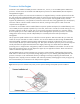
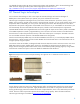
For ProLiant c-Class server blades, we designed smaller heat sinks than those used in rack-mount servers. Our server
blade heat sinks have vapor chamber bases, thinner fins, and tighter fin pitch than previous designs. The new
design achieves the largest possible heat transfer surface in the smallest possible package (Figure 5). Using smaller
heat sinks also creates more space on the server blades for DIMM slots and disk drives.
Figure 5: The left processor heat sink uses fully ducted design. The right heat sink is a traditional heat sink used in a 1U
rack-mount server.
Precise ducting on ProLiant c-Class server blades manages airflow and temperature based on the unique thermal
requirements of all the critical components. Tightly ducted airflow ensures that no air bypasses the server blade.
Ducting produces high pressure that reduces the amount of required airflow, which in turn reduces the power draw
of fans. The lower airflow requirement optimizes the available cooling capacity. More information about HP
Thermal Logic technologies is available at
www.hp.com/go/thermallogic.
Top view
Side view