
3Com Switch 7750 Configuration Guide


IS-IS Overview 331
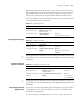
The NSAP Selector (SEL), sometimes present in N-SEL, is used as the protocol
identifier in IP. Different transmission protocols use different SELs. All SELs in IP are
00.
Because the area is explicitly defined in the address structure, the Level-1 router
can easily recognize the packets sent out of the area. Those packets are forwarded
to the Level-2 router.
The Level-1 router makes routing decisions based on the system ID. If the
destination is not in the area, the packet is forwarded to the nearest Level-1-2
router.
NET
The network entity title (NET) is an NSAP with SEL of 0. It indicates the network
layer information of the IS itself. SEL=0 means it provides no transport layer
information.
In normal condition, a router only needs one NET. But a router can have three NETs
at most for smooth area merging and partitioning. When you configure multiple
NETs, make sure their system IDs are same.
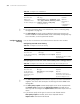
For example, there is a NET named 47.0001.aaaa.bbbb.cccc.00, where:
Area=47.0001, System ID=aaaa.bbbb.cccc,SEL=00.
Here is another example. A NET exists that is named 01.1111.2222.4444.00,
where:
Area=01, System ID=1111.2222.4444, SEL=00.
IS-IS PDU Format Hello
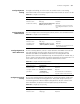
The Hello packet is used by routers to establish and maintain the neighbor
relationship. It is also called IS-to-IS Hello PDUs (IIH). For broadcast network, the
Level-1 router uses the Level-1 LAN IIH; and the Level-2 router uses the Level-2
LAN IIH. The P2P IIH is used on point-to-point network. Point-to-Point IIH is used
on a non-broadcast network.
LSP packet format
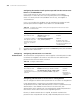
The link state PDUs (LSP) carries link state information. There are two types:
Level-1 LSP and Level-2 LSP. The Level-2 LSP is sent by the Level-2 router, and the
Level-1 LSP is sent by the Level-1 router. The level-1-2 router can sent both types
of the LSPs.
SNP format
The sequence number PDUs (SNP) confirms the latest LSPs received by neighbors.
It is similar to the Acknowledge packet, but more efficient.
The SNP contains the complete SNP (CSNP) and the partial SNP (PSNP), which are
further divided into Level-1 CSNP, Level-2 CSNP, Level-1 PSNP and Leval-2 PSNP.