
3Com Switch 4200G Configuration Guide

25
ARP CONFIGURATION
Introduction to ARP Address resolution protocol (ARP) is used to resolve IP addresses into MAC addresses.
Necessity of the Address
Resolution
IP address is used on the network layer and cannot be used directly for
communication, because network devices can only identify MAC addresses. To enable
packets travel on the network layer to reach the destination host, the MAC address of
the host is required. Therefore, before sending a packet, the sender needs to resolve
the IP address of the destination into the corresponding MAC address.
ARP Packet Structure ARP packets are classified into ARP request packets and ARP reply packets. Table 162
illustrates the structure of these two types of ARP packets.
■ As for an ARP request packet, all the fields except the hardware address of the
receiver field are set. The hardware address of the receiver is what the sender
request for.
■ As for an ARP reply packets, all the fields are set.
Table 163 describes the fields of an ARP packet.
Table 162 Structure of an ARP request/reply packet
Hardware type (16 bits)
Protocol type (16 bits)
Length of hardware address Length of protocol address
Operator (16 bits)
IP Address of the sender
Hardware address of the sender
IP Address of the receiver
Hardware address of the receiver
Table 163 Description on the fields of an ARP packet
Field Description
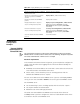
Hardware Type Identifies the type of the hardware interface.
Refer to Table 164 for the information about
the field values.
Protocol type Identifies the type of the protocol used by the
sending device. In TCP/IP, it is usually EtherType.
Length of the hardware address Hardware address length (in bytes)
Length of protocol address Protocol address length (in bytes)
Operator Indicates the type of a data packets, which can
be:
1: ARP request packets
2: ARP reply packets
3: RARP request packets
4: RARP reply packets
Hardware address of the sender Hardware address of the sender
IP address of the sender IP address of the sender