
R2511-HP MSR Router Series Fundamentals Configuration Guide(V5)

50
Ste
p
Command
Remarks
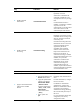
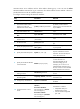
14. Configure the type of terminal
display.
terminal type { ansi | vt100 }
By default, the terminal display
type is ANSI.
The device supports two types of
terminal display: ANSI and
VT100. HP recommends that you
set the display type of both the
device and the client to VT100. If
the device and the client use
different display types (for
example, HyperTerminal or Telnet
terminal) or both are set to ANSI,
when the total number of
characters of the currently edited
command line exceeds 80, an
anomaly such as cursor corruption
or abnormal display of the terminal
display might occur on the client.
15. Configure the user privilege
level for login users.
user privilege level level
By default, the default command
level is 0 for the AUX user interface.
16. Set the maximum number of
lines to be displayed on a
screen.
screen-length screen-length
By default, a screen displays 24
lines at most.
A value of 0 disables pausing
between screens of output.
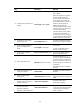
17. Set the size of command
history buffer.
history-command max-size value
By default, the buffer saves 10
history commands at most.
18. Set the idle-timeout timer.
idle-timeout minutes [ seconds ]
The default idle-timeout is 10
minutes. The system automatically
terminates the user's connection if
there is no information interaction
between the device and the user in
timeout time.
Setting idle-timeout to 0 disables
the timer.
19. Enable Telnet redirect for the
current user interface.
redirect enable
By default, the redirect function is
disabled.
20. Specify a Telnet redirect
listening port.
redirect listen-port port-number
The default port number is the
absolute user interface number plus
2000.
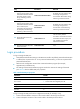
21. Disable Telnet option
negotiation during redirecting
a Telnet connection.
redirect refuse-negotiation
By default, Telnet option
negotiation is enabled.
22. Configure the user interface to
not convert the ASCII
characters 0xff during
redirecting a Telnet connection.
redirect refuse-teltransfer
By default, the user interface
converts the ASCII characters 0xff
to 0xff 0xff when redirecting a
Telnet connection.